
Last updated November 2, 2026
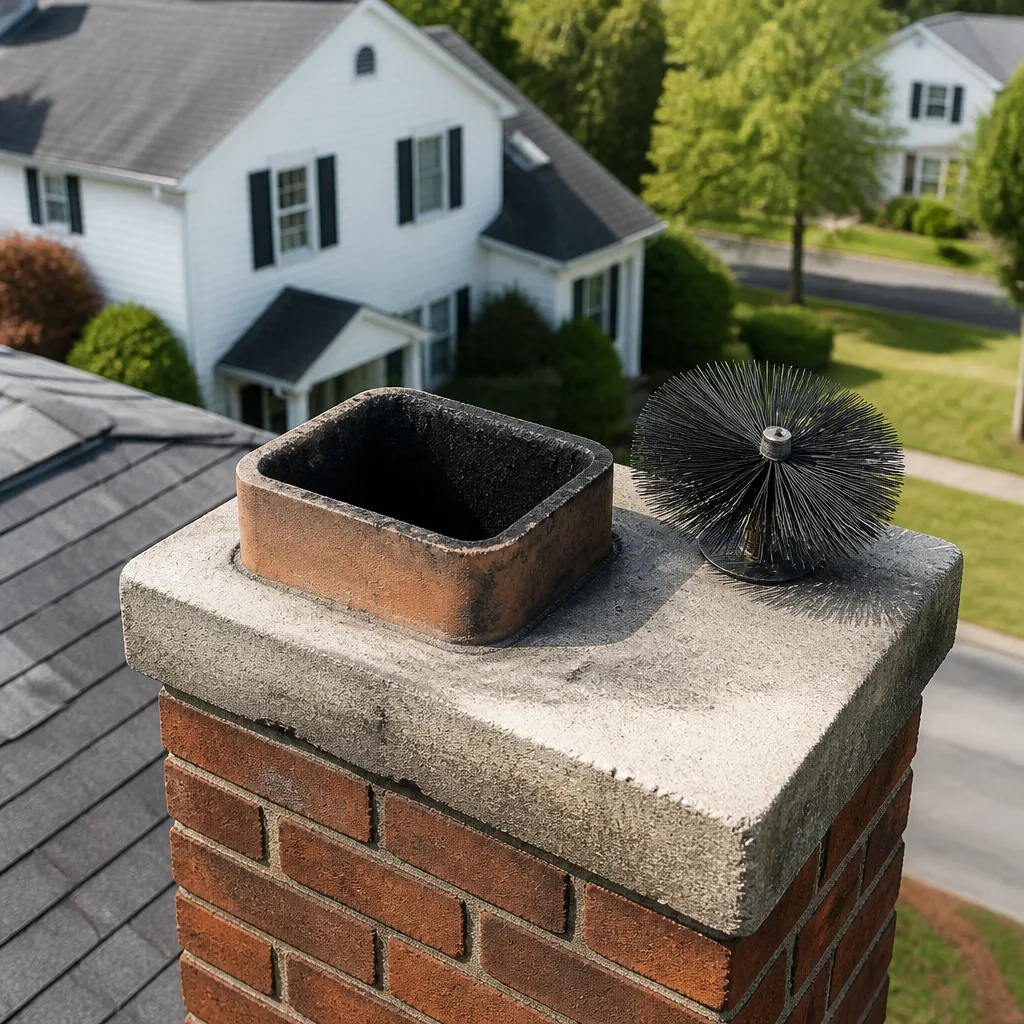 Sweep & inspection
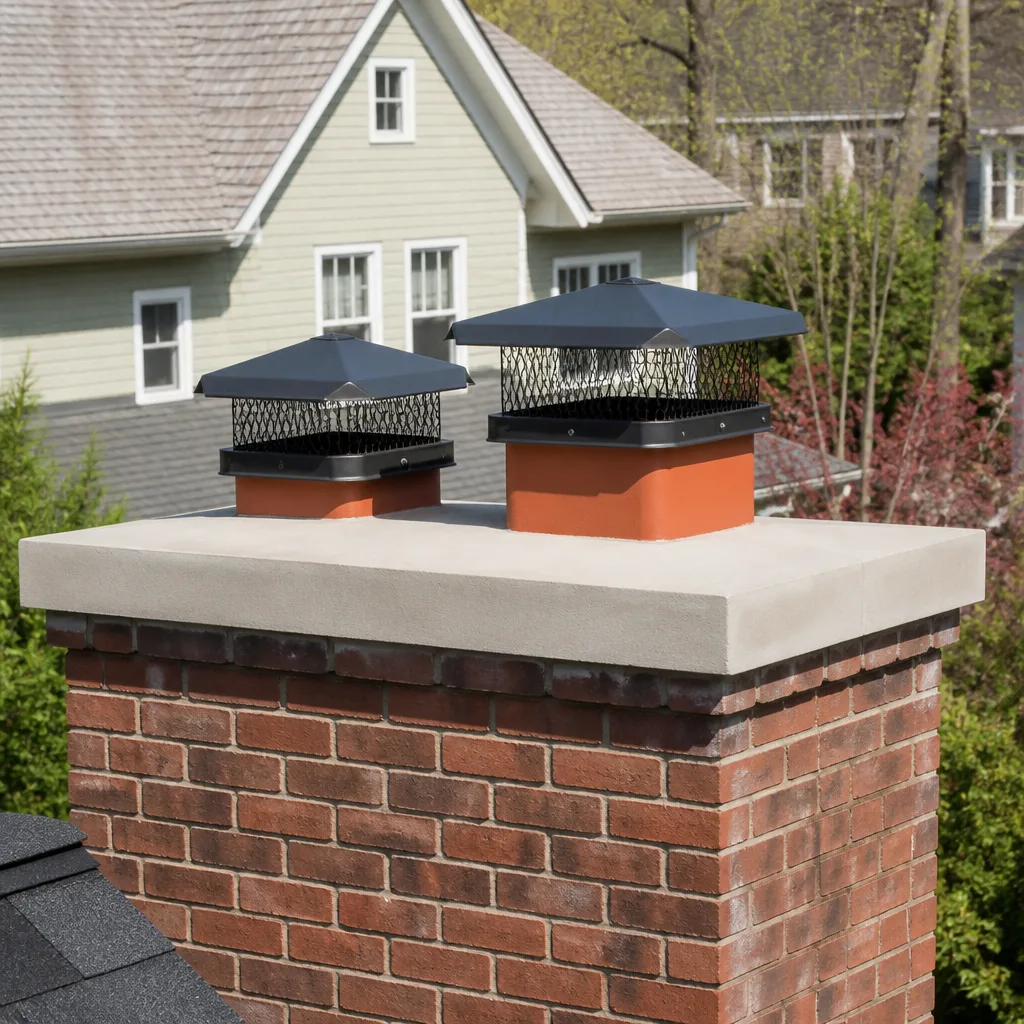 Caps & crowns
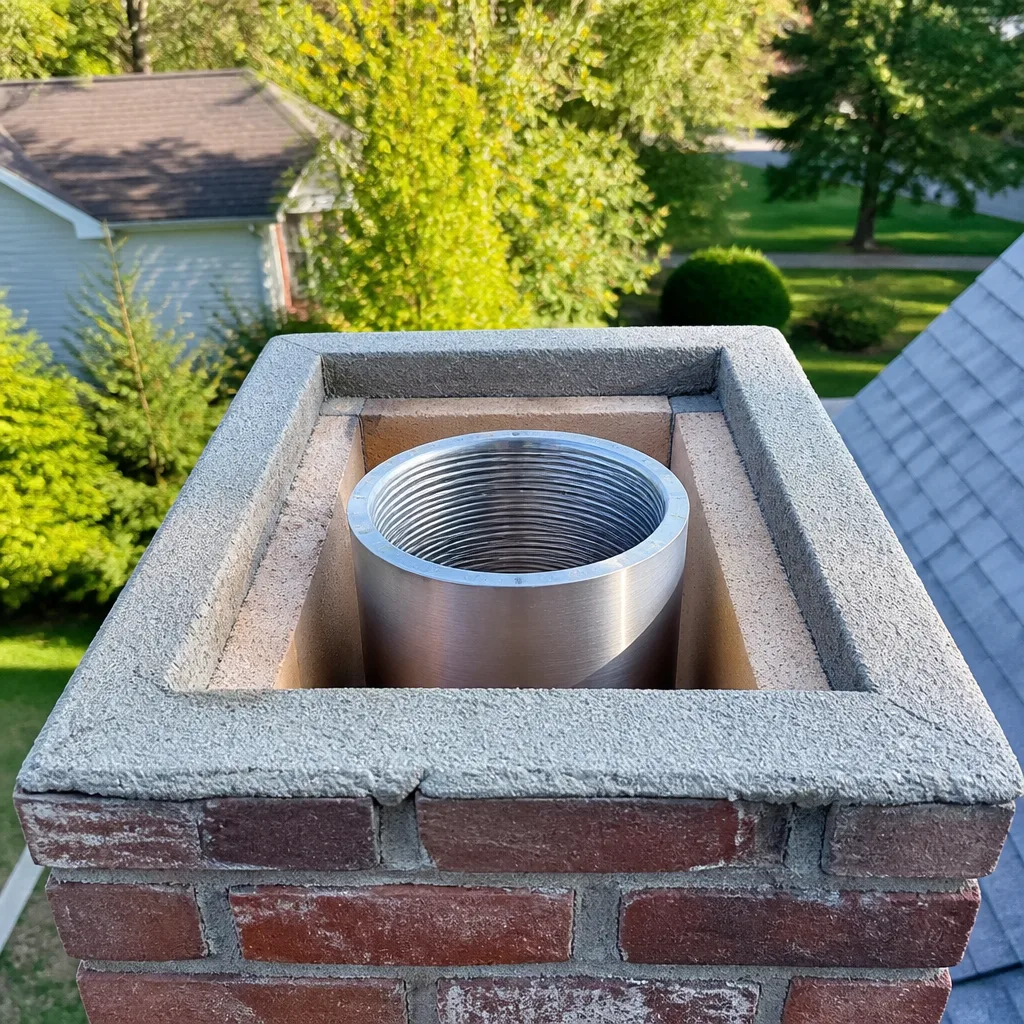 Flue relining
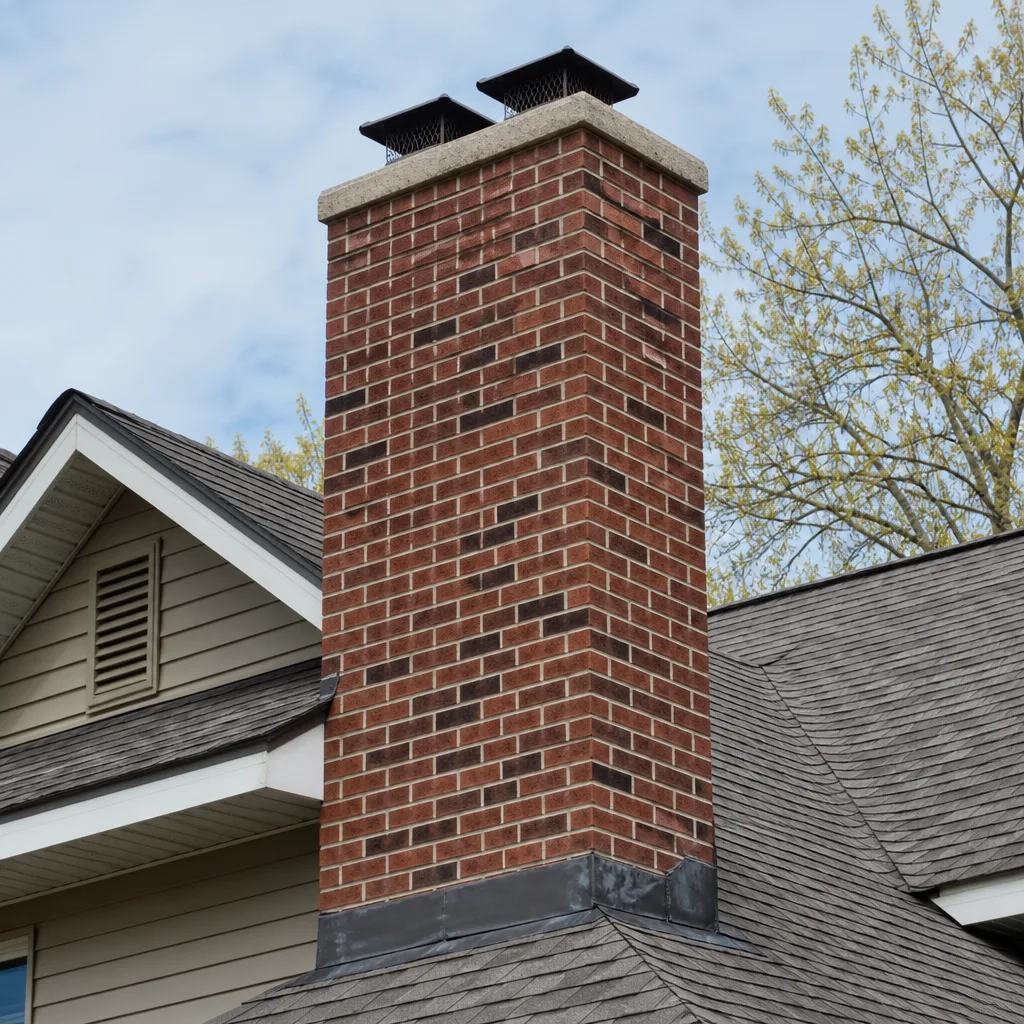 Masonry repair
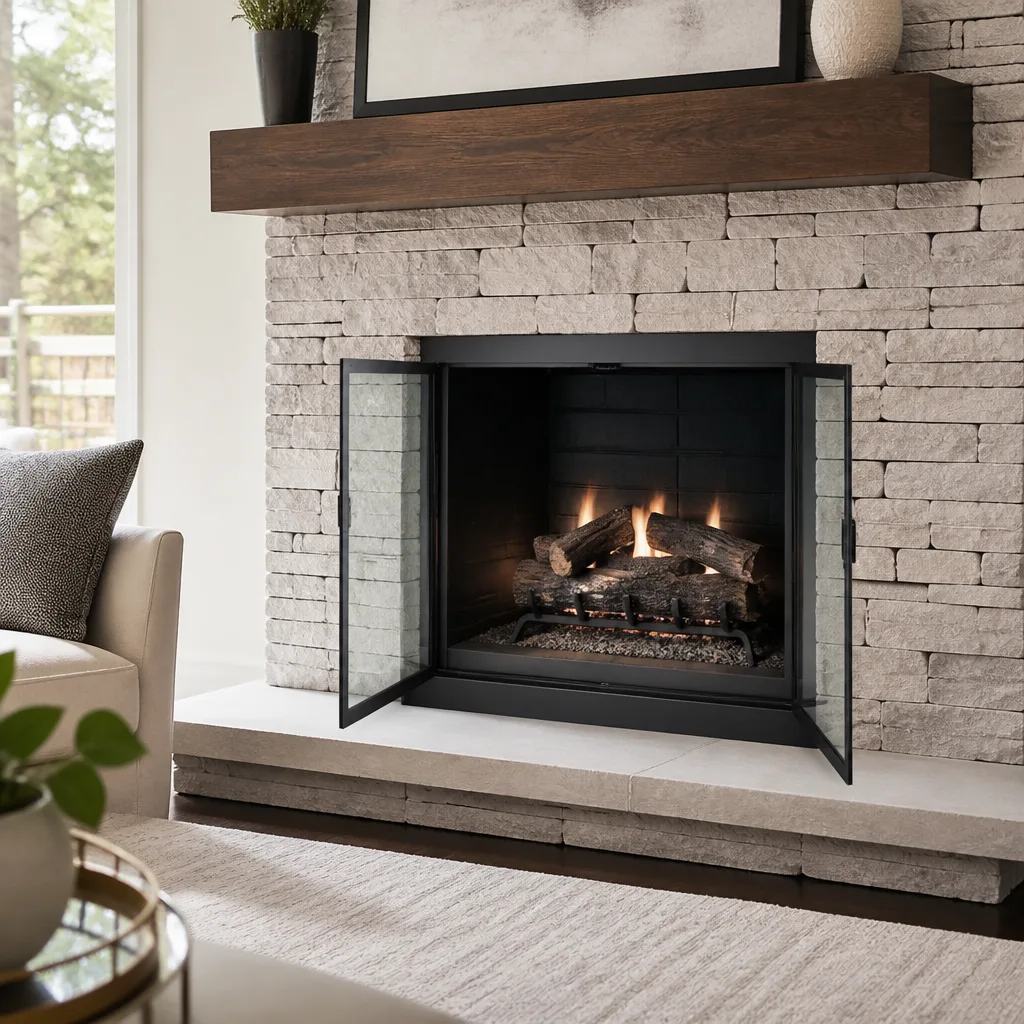 Gas fireplace service
Level 1 sweep and inspection to the NFPA 211 annual standard - flue, crown, cap, and flashing checked and photographed
Chimney sweep logs do not sweep chimneys. They loosen some creosote - which then falls where a brush and vacuum still have to collect it.
Choosing the Right Chimney Cleaning Brand: A Buyer’s Guide for Folsom
Most homeowners interview chimney companies the wrong way. They ask about price, availability, and whether the technician wears boot covers. Almost nobody asks what materials go inside the flue, what brand of liner gets installed, or which chemical treatments get used on Stage 2 creosote. That’s a problem, because two companies in Folsom can quote within fifty dollars of each other and deliver wildly different outcomes. One installs a relining system engineered to handle northern California’s freeze-thaw and heat-cycle stress. The other installs whatever flexible liner was cheapest at the supply house that week. You won’t see the difference in year one. You’ll see it in year four, when the cheap liner warps, cracks, or separates at the seam and you’re paying for the job twice. This guide walks through the product brands, material standards, and sourcing questions that separate a durable repair from a disposable one, specifically for Folsom homeowners.
Styles & brands we work with
- Sweep & inspection
- Caps & crowns
- Flue relining
- Masonry repair
- Gas fireplace service
Quick Answer
Choosing the right chimney cleaning brand means choosing a company that works with professional-grade materials from recognized industry manufacturers like DuraFlex, HeatShield, Gelco, and Copperfield rather than whatever is cheapest at the local big-box store. In Folsom, that means asking directly about liner certifications (UL 1777), chemical treatment types (TSP-based vs. consumer-grade), and cap hardware sourcing before you sign anything.
Table of Contents
- Why Material Quality Decides Repair Longevity
- The Product Categories You Need to Understand
- How to Ask About Material Sourcing Without Sounding Confrontational
- The Standards That Matter: UL 1777 and ASTM Designations
- Cleaning Compounds: Professional-Grade vs. Consumer-Grade
- Building a Quote Request That Compares Apples to Apples
- What Folsom’s Climate Means for Material Choices
- Common Mistakes to Avoid
- When to Call a Professional
- Frequently Asked Questions
- The Bottom Line
Why Material Quality Decides Repair Longevity
Here’s what nobody tells you about chimney repair: the labor is usually the same, whether the materials are cheap or not. Cutting a liner to length, dropping it down the flue, sealing the connections, and capping it off takes roughly the same number of hours no matter what brand of liner you’re dropping. What changes is what happens after the crew leaves. Cheap liners, often imported with inconsistent alloy composition, expand and contract at different rates than the surrounding masonry. Over three or four Folsom summers, with daytime temperatures pushing triple digits and overnight temps dropping into the 60s, that differential stress adds up. Hairline cracks appear at the seams. Warping begins. What started as a “bargain” liner becomes a ventilation restriction, a creosote trap, or a carbon monoxide risk.
Professional-grade liner systems like those from DuraFlex are engineered around UL 1777 testing, which measures exactly this kind of thermal stress, along with corrosion resistance and structural integrity under heat. The difference isn’t branding. It’s testing. A liner that passes UL 1777 has been subjected to a standardized burn and stress protocol that a no-name import may never have seen. That’s why we install liners built to a listed standard, sourced from manufacturers who publish their test data. In Folsom’s climate, that’s the only kind of liner that makes sense.
We see this play out regularly in chimney repair in Folsom. A homeowner calls us because a sweeping company flagged a deteriorated flue, got a quote from a budget contractor, and now, four years later, the replacement liner is already failing. The conversation usually starts with, “I thought I already fixed this.” The answer is that they paid for labor and got entry-level materials. The fix only holds as long as the weakest component does. In a firebox, that weakest component is almost always whatever was cheapest to buy.
The Product Categories You Need to Understand
If you want to evaluate a chimney company by the materials they use, you need to know what categories of products actually exist. Most homeowners think “chimney cleaning” means a brush, a vacuum, and maybe some spray. The reality is that chimney work spans five distinct product categories, and the quality bar in each one directly affects safety and longevity.
- Flexible stainless steel liners. These are the tubes that run up the inside of your flue, carrying exhaust gases out of your house. Used for gas appliances, wood-burning inserts, and flue retrofits. The brand matters because alloy quality, weld seam construction, and wall thickness all vary. Look for UL 1777 listing. We stock and install DuraFlex liner systems for code-compliant flue upgrades and retrofits in Folsom.
- Flue resurfacing and repair systems. These are applied inside the existing flue to seal cracks and restore the interior surface without a full tear-out. HeatShield is the system we use for this. It’s a cerfied resurfacing product, not a patch job, and it can extend the life of an aging flue liner without the cost of full relining.
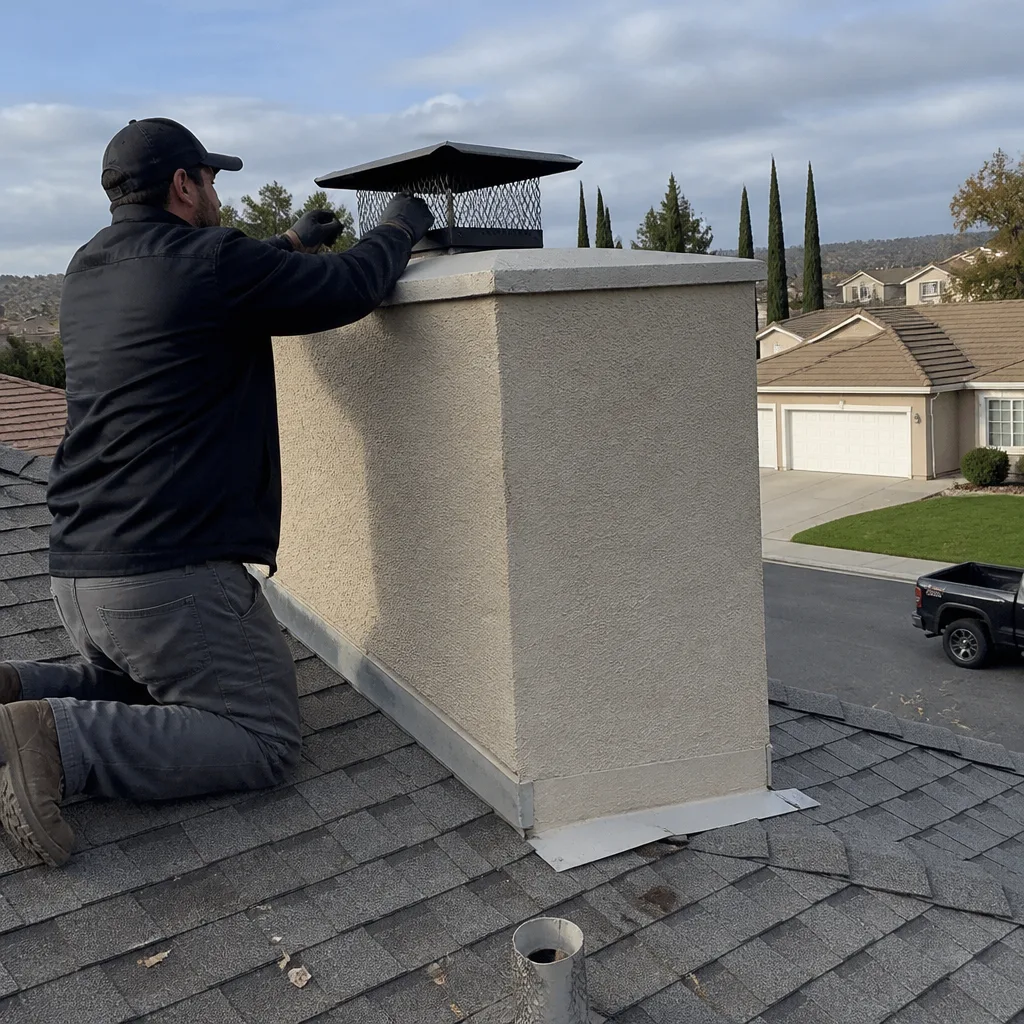
- Chimney caps and ventilation hardware. The metalwork at the top of the chimney that keeps out rain, animals, and debris while letting exhaust escape. Galvanized steel rusts in a few Folsom winters. Stainless steel or copper caps last decades. Brands like Gelco and Famco manufacture commercial-grade caps and louvers that hold up to sun, rain, and repeated heating cycles.
- Chimney cleaning compounds and chemicals. Used to break down creosote, especially Stage 2 and Stage 3 deposits that mechanical brushing can’t remove. Professional-grade compounds use trisodium phosphate (TSP) formulations that alter creosote chemistry. Consumer-grade “creosote logs” mostly don’t do anything meaningful on significant buildup.
- Smoke chamber coatings and parging materials. Applied to smooth the transition between the firebox and the flue. These need to be heat-rated and specifically formulated for chimney use. Hardware-store mortar mixes can crack under repeated high heat, creating gaps where embers can catch.
Each of these categories has its own material standards and product hierarchy. A company that can walk you through the brands they install in each category is signaling trade-level competence. A company that says “we use whatever the supply house has in stock” is signaling something else entirely.
How to Ask About Material Sourcing Without Sounding Confrontational
Nobody wants to be the homeowner who walks into a bid meeting sounding like they’re cross-examining a witness. But here’s the thing: any legitimate chimney professional expects these questions. We answer them every week. The contractors who get defensive about material sourcing are usually the ones who have a reason to avoid the conversation.
The key is to frame the question around longevity and safety, not cost. You’re not asking “why are your prices higher?” You’re asking “what am I getting for this price, and how long will it last?” That’s the question any quality-first operation wants you to ask, because it’s the conversation where their materials advantage actually shows up.
Here’s a step-by-step phrasing guide:
- After the inspection, ask: “What brand of liner system do you install, and does it carry a UL 1777 listing?” A direct, specific question. The answer should be a brand name and a standard reference, not “we use good stuff.” Listen for specificity. If they say “DuraFlex” or “we use a UL-listed flexible stainless system,” you’re talking to a trade-level operation. If they say “whatever the supplier stocks” or “it’s all the same stuff,” that’s your signal to get another quote.
- Ask: “Do you offer flue resurfacing as an option, or is it always a full reline?” This tells you whether the company is oriented toward repair or replacement. A company that offers HeatShield or a similar resurfacing system is giving you options. A company that only quotes full relining may be margin-driven, not diagnosis-driven. In Folsom, where many homes have masonry chimneys dating to the 70s and 80s, resurfacing is often a perfectly good fix that costs less than half.
- Ask: “What kind of cap or termination hardware do you use?” Chimney caps are small, so many contractors cheap out on them. The difference between a galvanized cap and a Gelco stainless cap is maybe $40 of material cost. But the galvanized cap rusts out in three to five years, and then you’re paying for a replacement plus the labor to get back on the roof. Ask specifically about stainless or copper.
- Ask: “What cleaning compounds do you use for Stage 2 creosote?” This question separates real sweep companies from brush-and-vacuum operators. If they mention TSP-based chemicals, rotary treatments, or specific professional-grade products, they know what they’re doing. If they say “we don’t really use chemicals” or “we just brush it out,” they may not be equipped to handle anything beyond light Stage 1 buildup.
One more note on tone. You’re not being difficult. You’re being an informed buyer. The Folsom homeowners who’ve paid for cheap chimney work twice would tell you to ask these questions. And honestly, any contractor worth hiring would rather work for someone who asks these questions than someone who just signs whatever gets put in front of them.
The Standards That Matter: UL 1777 and ASTM Designations
If you’re going to evaluate chimney materials, you need to know what the certification labels actually mean. These aren’t marketing jargon. They’re engineering standards, testing protocols, and regulatory requirements that determine whether a product is safe to put inside your chimney. Here are the four that matter most for Folsom homeowners.
UL 1777 (Flexible Chimney Liner Systems). This is the definitive standard for flexible chimney liners. A product that carries the UL 1777 listing has been tested for structural integrity under heat, corrosion resistance, flue gas tightness, and resistance to creosote ignition. It’s not a suggestion. It’s the standard specified in most building codes, including California’s. When you’re interviewing a chimney company in Folsom, ask directly: “Is your liner system UL 1777 listed?” A yes should be immediate and specific. A blank stare is your answer.
ASTM E84 (Surface Burning Characteristics). This is a material flammability test that measures flame spread and smoke development. It matters for smoke chamber coatings, parging materials, and anything that’s applied to the interior of the chimney. A material with a poor ASTM E84 rating can actually contribute to chimney fires rather than containing them.
ASTM C129/C129 (Mortar for Masonry). If your chimney needs repointing or parging, the mortar used has to be heat-rated and appropriate for chimney application. Standard hardware-store mortar mix is not formulated for the repeated heating and cooling cycles a chimney experiences. It will crack, and those cracks become creosote collection points.
UL 103 and UL 127 (Factory-Built Chimney Systems). If your home has a factory-built fireplace rather than a masonry chimney, these standards apply to the prefabricated chimney units themselves. They matter when you’re replacing components or evaluating whether an existing system can handle a new insert.
The thing about these standards is that nobody in Folsom is going to show up at your door with test certificates. But the standards exist so you don’t have to. A liner that carries a UL 1777 listing has already been tested against the conditions that matter. A liner without that listing is an unknown quantity. You’re not a materials engineer. You shouldn’t have to be. The listing does the homework for you.
Cleaning Compounds: Professional-Grade vs. Consumer-Grade
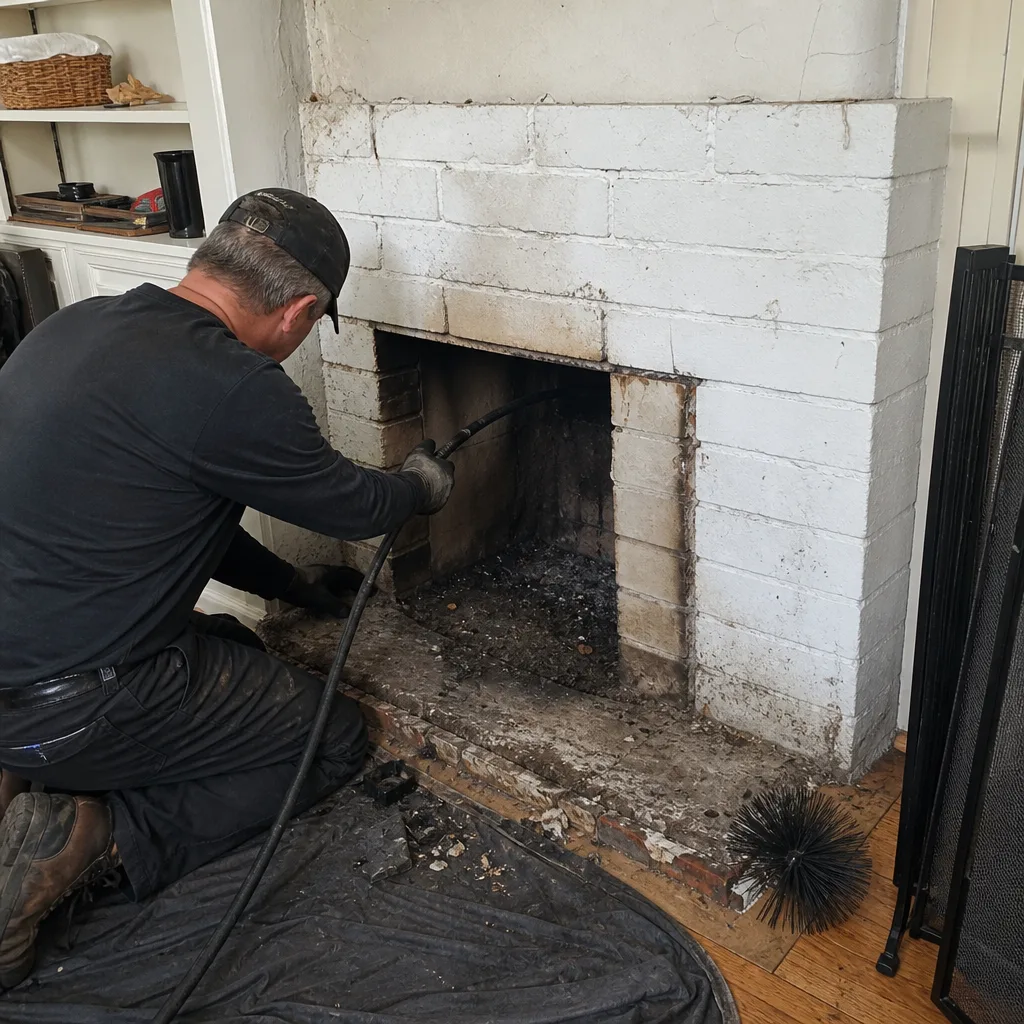
Here’s a fact that surprises most homeowners: a chimney sweep’s primary tool is mechanical, not chemical. The brush does most of the work. But mechanical brushing only removes what’s physically on the surface of the flue. Stage 2 creosote, the shiny, flaky, tar-like buildup that forms when a chimney isn’t swept at the right intervals, bonds to the flue surface. Brushing alone won’t remove it. That’s where chemical compounds come in.
Professional-grade cleaning compounds are fundamentally different from the “creosote removal logs” or “chimney cleaning powders” you can buy at a hardware store. The professional products, including trisodium phosphate (TSP) formulations and rotary chemical treatment systems, work by changing the chemical structure of creosote. TSP is an alkaline compound that reacts with the acidic components in creosote, breaking down the tar-like deposits so they can be brushed away. This is not the same thing as a creosote log, which burns at a high temperature and may loosen some surface deposits but does not chemically alter the creosote itself.
For Folsom homeowners with wood-burning fireplaces, the distinction matters because Stage 2 creosote is common in this climate. Northern California’s hot, dry summers mean chimneys that sit unused for six months. That’s six months for creosote to harden and bond. When burn season starts again in November, the first few fires bake that hardened creosote further. The result is often Stage 2 deposits that consumer products simply can’t address.
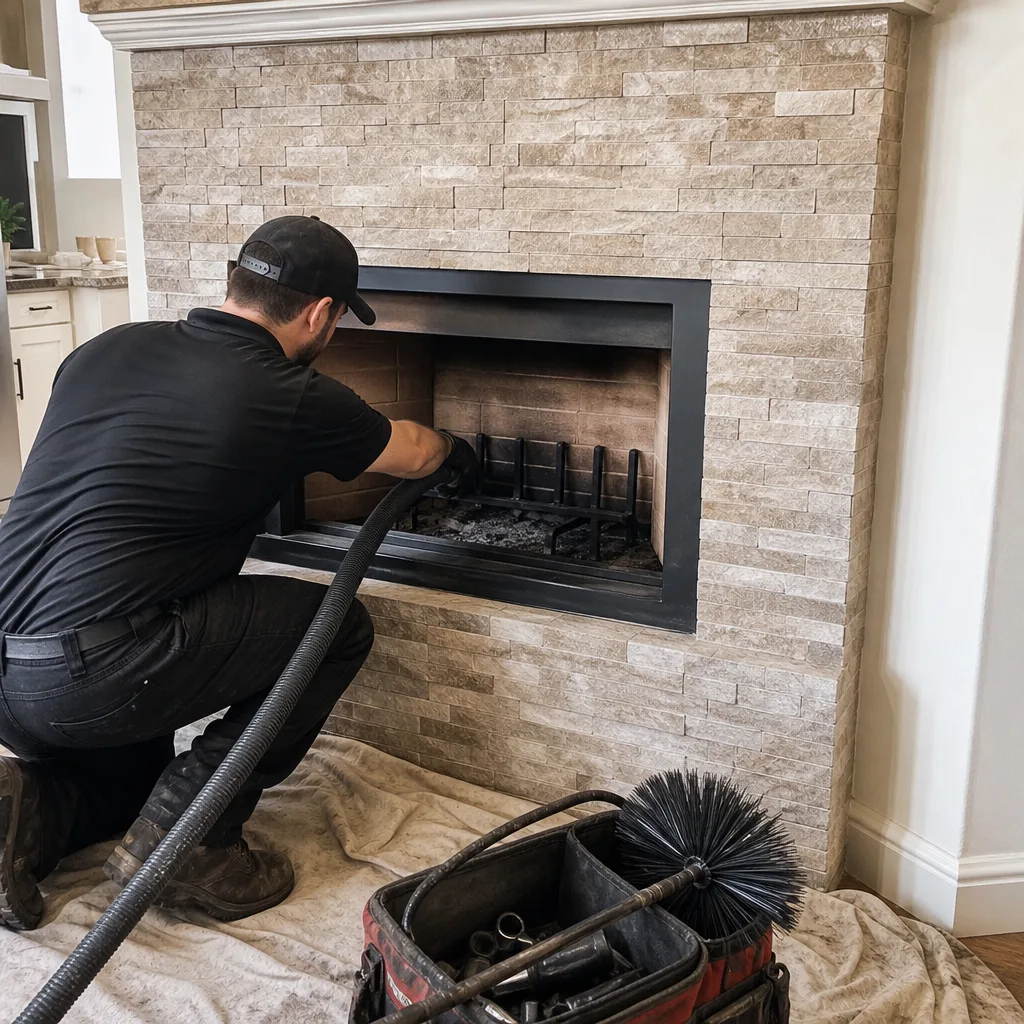
Our approach to chimney sweeping in Folsom involves mechanical brushing first, then an assessment of what’s left behind. If we’re seeing Stage 2 or 3 deposits that brushing won’t remove, we use professional-grade chemical treatments and rotary systems designed for exactly that condition. We don’t sell a chemical treatment as part of every sweep, because most chimneys don’t need it every time. We recommend it when the flue condition calls for it, and we explain what we saw and what we’re treating before we do it.
The other professional-grade distinction is in the application method. Rotary chemical systems use a motorized whip head that’s run up the flue, applying the treatment compound under pressure. This reaches areas a hand brush and pump sprayer can’t. It’s more thorough, and it’s the difference between treating the whole flue surface and treating the parts a brush happens to touch.
Building a Quote Request That Compares Apples to Apples
Here’s a trap Folsom homeowners fall into constantly: you get three quotes for chimney repair, compare the bottom lines, and pick the cheapest. But the quotes aren’t comparing the same thing. One contractor is quoting a UL 1777-listed liner with a stainless cap and a proper chimney crown seal. Another is quoting a thinner, unlisted liner with a galvanized cap and no mention of the crown. The prices are $400 apart, so the cheaper one looks better. Until year three or four.
The fix is to build a quote request that forces every contractor to price the same work. It’s not about being difficult. It’s about making sure you’re comparing the same scope. Here’s what to include in any chimney repair quote request in Folsom:
- Liner specification. Ask for the brand, material (316 stainless vs. 304 vs. aluminum), and UL listing status of the proposed liner system. If the quote doesn’t specify these, the contractor is leaving themselves room to install whatever’s cheapest. A quote that says “flex liner” without a brand or listing is incomplete.
- Cap and termination hardware. Specify stainless steel or copper for the cap. Ask what brand they install. If the quote says “cap included” without a material or brand, they’re planning to put a $25 galvanized cap on a $2,000 liner system.
- Cleaning scope and compounds. If the quote includes a sweep, ask what level of cleaning is included and whether chemical treatment is part of the price or an add-on. If you know you have significant creosote buildup, ask specifically whether they’re equipped to handle Stage 2 or 3.
- Smoke chamber work. Ask whether the quote includes any parging or coating of the smoke chamber, and what material they use. Many quotes skip this step entirely, which leaves a major creosote collection point unaddressed.
- Crown sealant. The chimney crown, the concrete cap at the top of the masonry, is a prime leak point. Ask whether the quote includes crown sealing and what product they use. A crown sealant rated for chimney use is different from a general-purpose caulk.
When you ask these questions, you’ll get two kinds of responses. Quality-first contractors will have answers. They’ll tell you the brand, the listing, the material, and why they chose it. Margin-first contractors will say things like “we use standard industry materials” or “it’s all basically the same.” That’s your cue. Not to end the conversation rudely, but to recognize that you’re comparing different scopes under the same bottom-line number.
And while you’re at it, think about the vents that aren’t attached to your fireplace. Dryer vent cleaning in Folsom is relevant here because dryer vents fail the same way chimney liners do: with cheap materials, improper installation, and accumulated lint turning into a fire hazard. If you’re already having a chimney professional out, ask whether they also inspect dryer vents. A company that handles both means one dispatch, one inspection, one relationship.
What Folsom’s Climate Means for Material Choices
Folsom’s climate is harder on chimney systems than most homeowners realize. It’s not the dramatic freeze-thaw of the Midwest or the salt-air corrosion of the coast. It’s the repetition. Hot, dry summers bake the masonry and the metal components. Then burn season brings rapid heating cycles, with flue temperatures swinging from 70 degrees to 700 degrees and back in the space of a few hours. Then spring rains hit heated, dried-out mortar that’s developed micro-cracks over the winter’s burn sessions. The cycle repeats year after year.
That specific stress profile is why material choice matters more in Folsom than in many other markets. A liner that’s engineered for thermal cycling will handle these swings without cracking. A cheaper liner with inconsistent wall thickness will develop stress fractures at the points where the metal is thinnest. A professional-grade mortar formulated for chimney use will absorb and release the heating and cooling. A standard masonry mix will crack on the first or second serious burn cycle.
We work with a curated roster of professional-grade brands precisely because this climate demands it. DuraFlex liner systems are engineered for thermal stress and carry the UL 1777 listing. HeatShield resurfacing materials handle repeated high-heat exposure. Gelco and Famco hardware is built for years of direct sun and rain exposure on Folsom rooftops.
And one more Folsom-specific note: many homes here have chimneys built during the construction boom of the 1970s and 80s. Those chimneys are now 40 to 50 years old. The original materials have been through decades of heat cycles. If you haven’t had a structural inspection in the last few years, now is the time. Not after another burn season passes and the deterioration compounds further.
If you’re new to fireplace maintenance or buying a home with an existing chimney, start with the basics on our Chimney Sweep Folsom home page. It covers what a standard sweep includes and when to schedule one before burn season.
Common Mistakes to Avoid
- Comparing quotes by bottom line only. A $1,400 liner quote and a $1,900 liner quote are rarely the same job. The cheaper one usually means a thinner liner, a galvanized cap, and no crown sealing. You’ll pay the difference later. Ask what’s in the scope before you compare numbers.
- Assuming all stainless liners are identical. Stainless steel is an alloy, and the composition varies. 316 stainless has higher corrosion resistance than 304. Some import liners use inconsistent alloy blends that don’t perform like either. The UL 1777 listing is what separates the tested products from the unknowns.
- Skipping the smoke chamber. The smoke chamber, that angled transition above the firebox, collects creosote faster than almost any other part of the system. Contractors who skip parging or coating here are leaving the most flammable surface in the system unaddressed. Ask whether it’s included.
- Using consumer-grade creosote logs as a substitute for a professional sweep. Creosote logs burn hot and may loosen some surface deposits, but they don’t remove Stage 2 or 3 buildup. They also don’t inspect the flue, check the liner, or catch structural problems. They’re a supplement, not a substitute.
- Not asking about cap material. A galvanized cap on a Folsom roof lasts three to five years before rusting through. If your chimney contractor is installing a galvanized cap, they’re not doing you any favors. Stainless or copper only.
- Ignoring the dryer vent. Dryer vents are the chimney system that most Folsom homeowners never think about until there’s a problem. Lint buildup in a dryer vent is a leading cause of residential fires. A professional dryer vent cleaning should be on your annual list right next to the chimney sweep.
- Waiting until you can see damage to call. By the time a liner is visibly cracked or a cap is rusted through, the damage is already done. The failure didn’t just start. It started years earlier, and it’s been compounding. Annual inspections catch these things early, when the fix is a resurfacing job instead of a full reline.
When to Call a Professional
Some things you can DIY. Replacing a chimney liner, resurfacing a flue, or treating Stage 3 creosote isn’t on that list. These are jobs that involve high heat, structural materials, and in the case of liner installation, working at heights that require proper safety equipment and training. If you’re seeing flaky creosote deposits that look like shiny tar, if your chimney hasn’t been swept in more than a year, or if you’ve noticed any signs of water intrusion around the firebox, get a professional assessment. Chimney Sweep Folsom offers free estimates in Folsom. Call (833) 589-9896 and we’ll take a look.
Frequently Asked Questions
Ask for a UL 1777-listed flexible stainless steel liner system, and ask which brand the contractor installs. We use DuraFlex systems in Folsom because they’re engineered for thermal stress and carry the UL listing. A contractor who can’t tell you the brand of liner they install is giving you an incomplete answer.
HeatShield is a flue resurfacing system, and it’s designed for situations where the existing liner is intact enough to serve as a substrate but has minor cracks, gaps, or deterioration. If the liner is completely failed or the flue is structurally compromised, a full reline with a DuraFlex system is the right call. The advantage of HeatShield is that it costs significantly less than a full reline and can be done without demolition. We offer HeatShield-certified application as an alternative for homeowners who don’t need a full replacement.
The standard recommendation is once per year, or once per cord of wood burned, whichever comes first. In Folsom, where many homeowners burn every evening from November through March, that’s usually one sweep per year, ideally before the first fire of the season. If you’re burning more than a cord, or if you’ve noticed heavy creosote buildup in the past, you may need a mid-season sweep as well.
Stage 2 creosote is the shiny, flaky, tar-like form of creosote that forms when a chimney isn’t swept at the right intervals and the deposits harden and bond to the flue. It’s harder to remove than Stage 1, which is the dusty soot that brushes off easily. Stage 2 creosote is also more flammable than Stage 1, making it a serious fire hazard. It often requires chemical treatment with TSP-based compounds or rotary systems to remove properly.
Yes. Dryer vent cleaning in Folsom is one of our three core services, alongside chimney sweeping and chimney repair. Lint buildup in dryer vents is a leading cause of residential house fires, and the problem compounds in Folsom’s dry climate. We inspect and clean dryer vents with the same attention to material quality and safety that we bring to chimney work.
Chimney sweep pricing in Folsom typically ranges from $150 to $350 depending on the level of inspection included, the condition of the flue, and whether chemical treatments are needed. A standard sweep with a Level 1 inspection is on the lower end. A sweep that includes a Level 2 camera inspection and Stage 2 creosote treatment is on the higher end. Call (833) 589-9896 for an exact quote. Estimates are free.
The Bottom Line
Choosing the right chimney cleaning brand in Folsom comes down to material standards, not marketing. Ask which liner systems a contractor installs and whether they carry UL 1777 certification. Ask whether they offer HeatShield resurfacing as an option or if every fix is a full reline. Ask what chemicals they use for Stage 2 creosote and whether they use professional-grade TSP formulations. And if you’re replacing a cap, ask for stainless or copper. The homeowners who skip these questions save a few hundred dollars up front and pay for the same work again in a few years. The ones who ask upfront get a chimney that handles Folsom’s heat-cycle conditions for decades. Questions are free. Replaced liners aren’t.
For a professional assessment of your chimney, dryer vent, or flue system, Chimney Sweep Folsom offers free estimates. Call (833) 589-9896 or visit our chimney sweep services in Folsom to schedule an inspection.
Written by the team at Chimney Sweep Folsom, serving Folsom since 2011.
See the difference
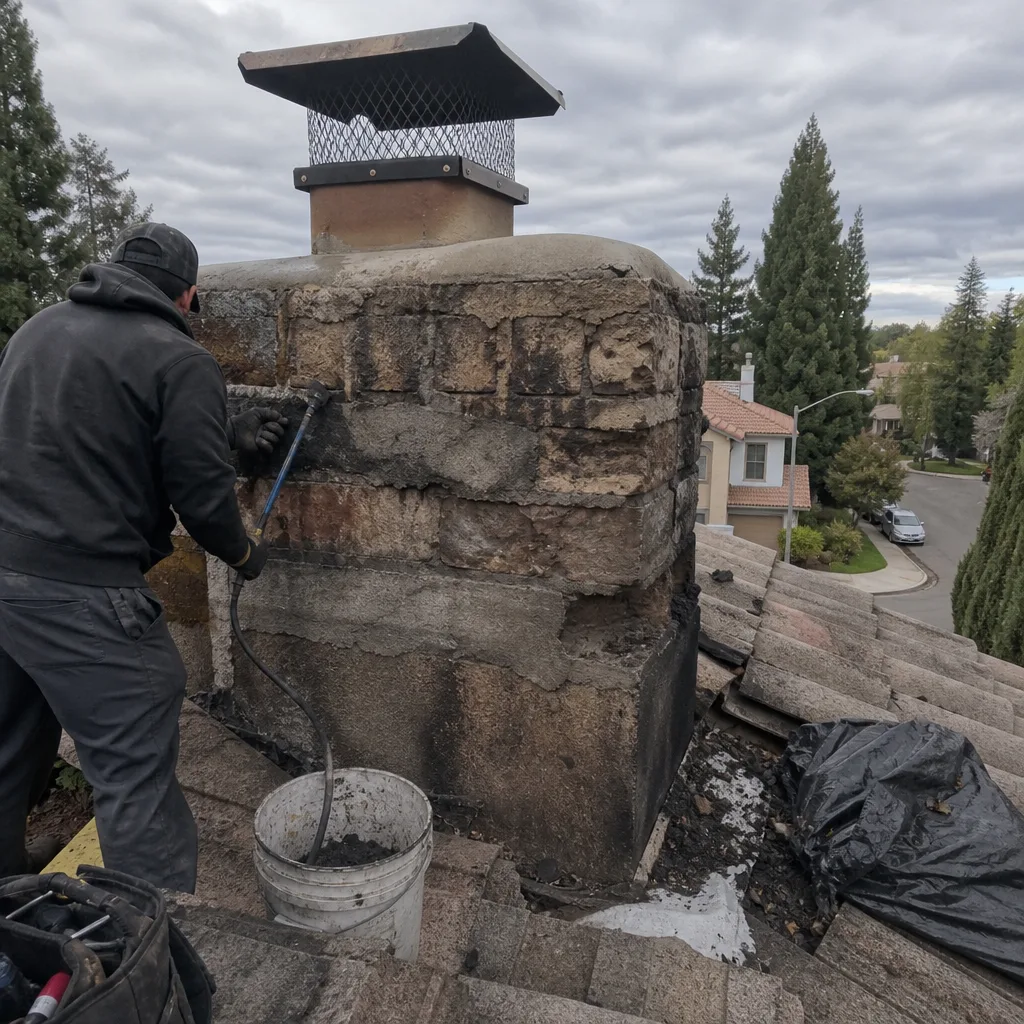 Before
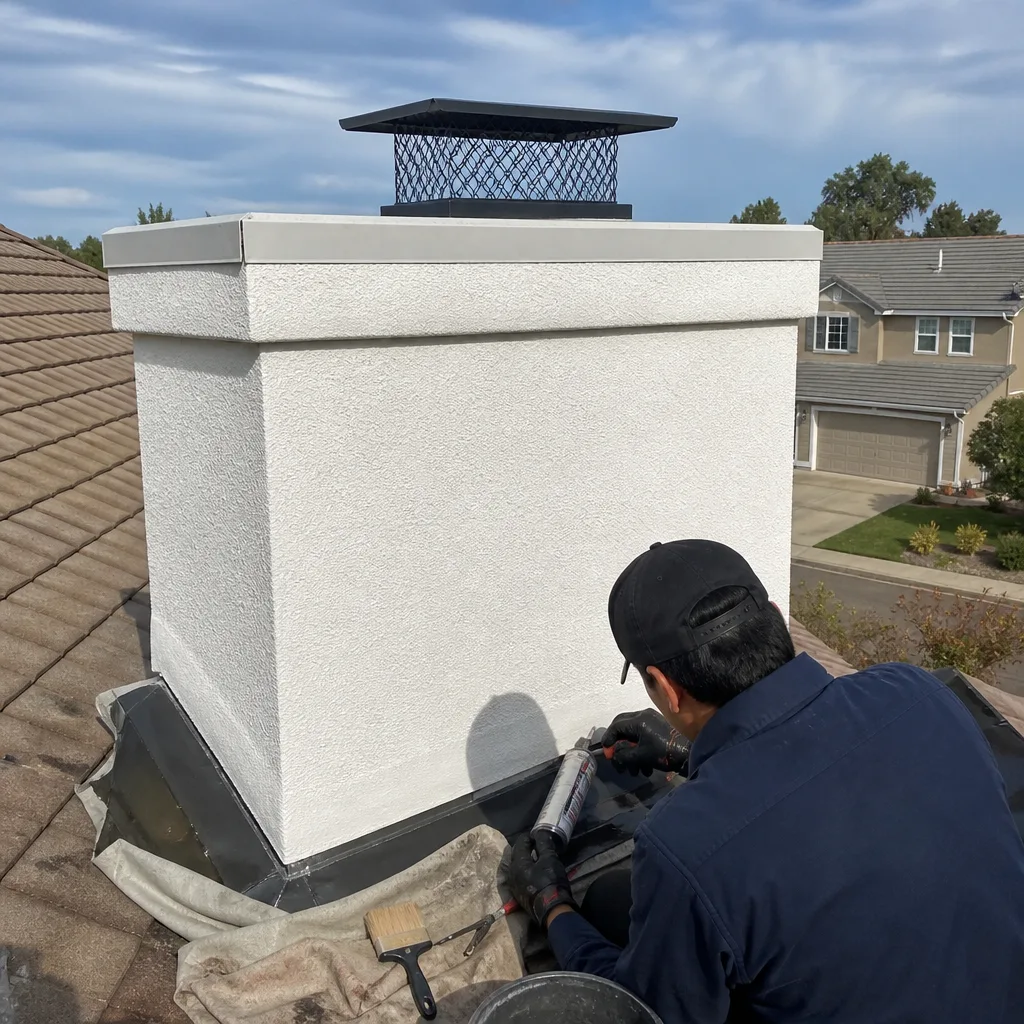 After
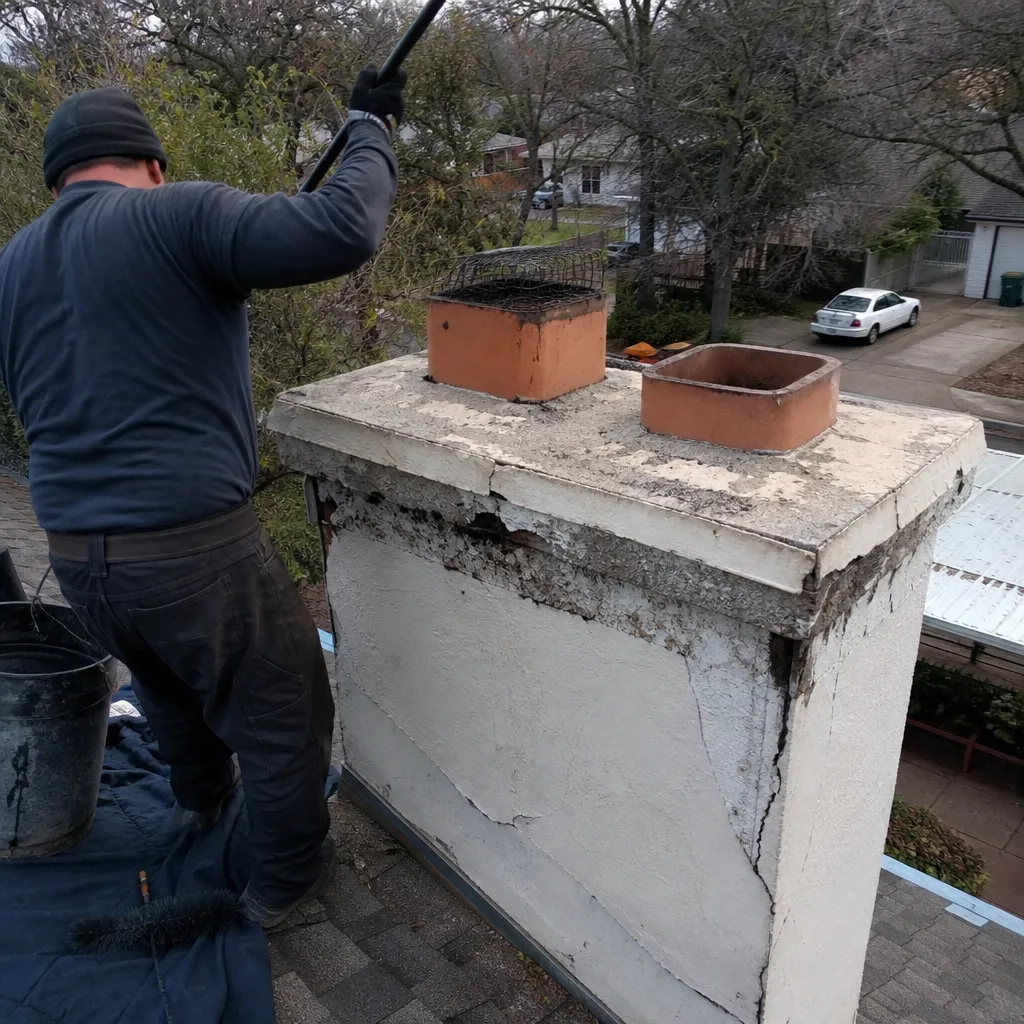 Before
 After
 Before
 After