
Last updated November 2, 2026
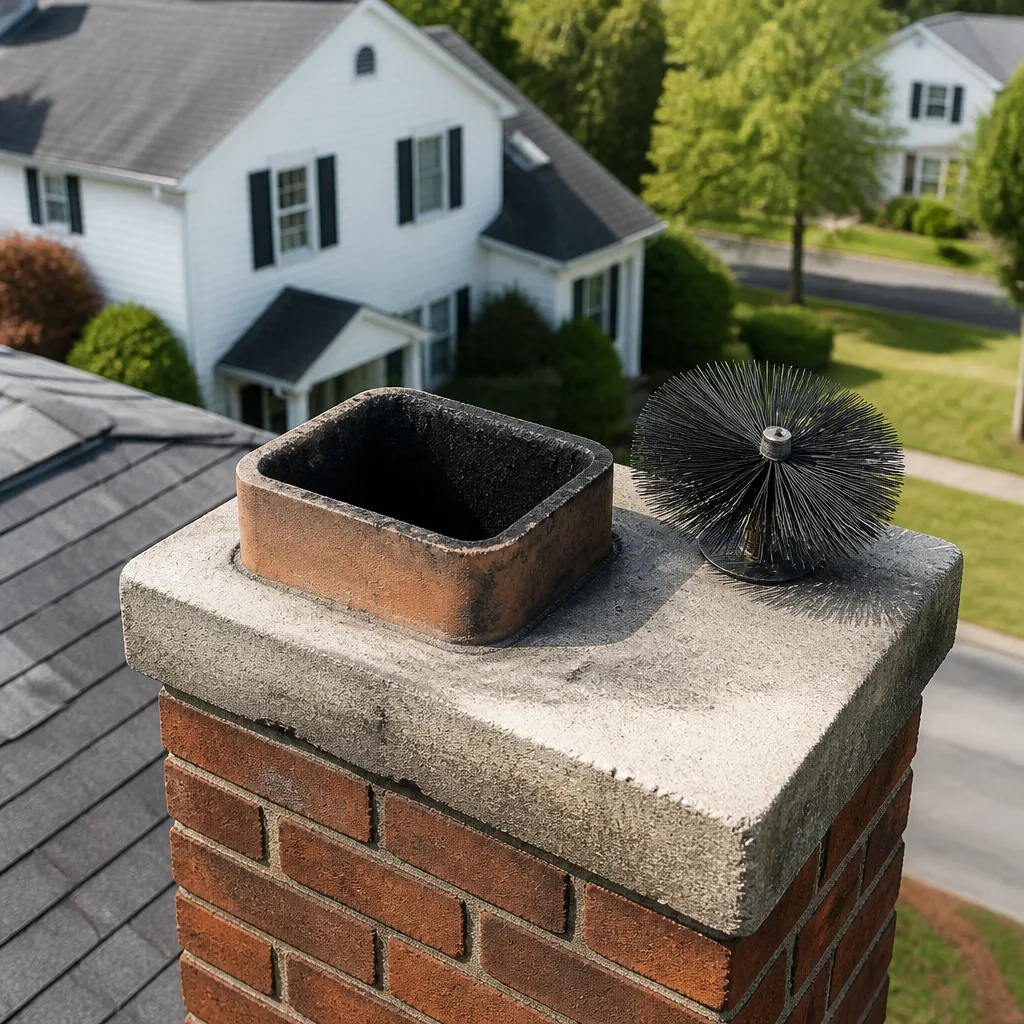 Sweep & inspection
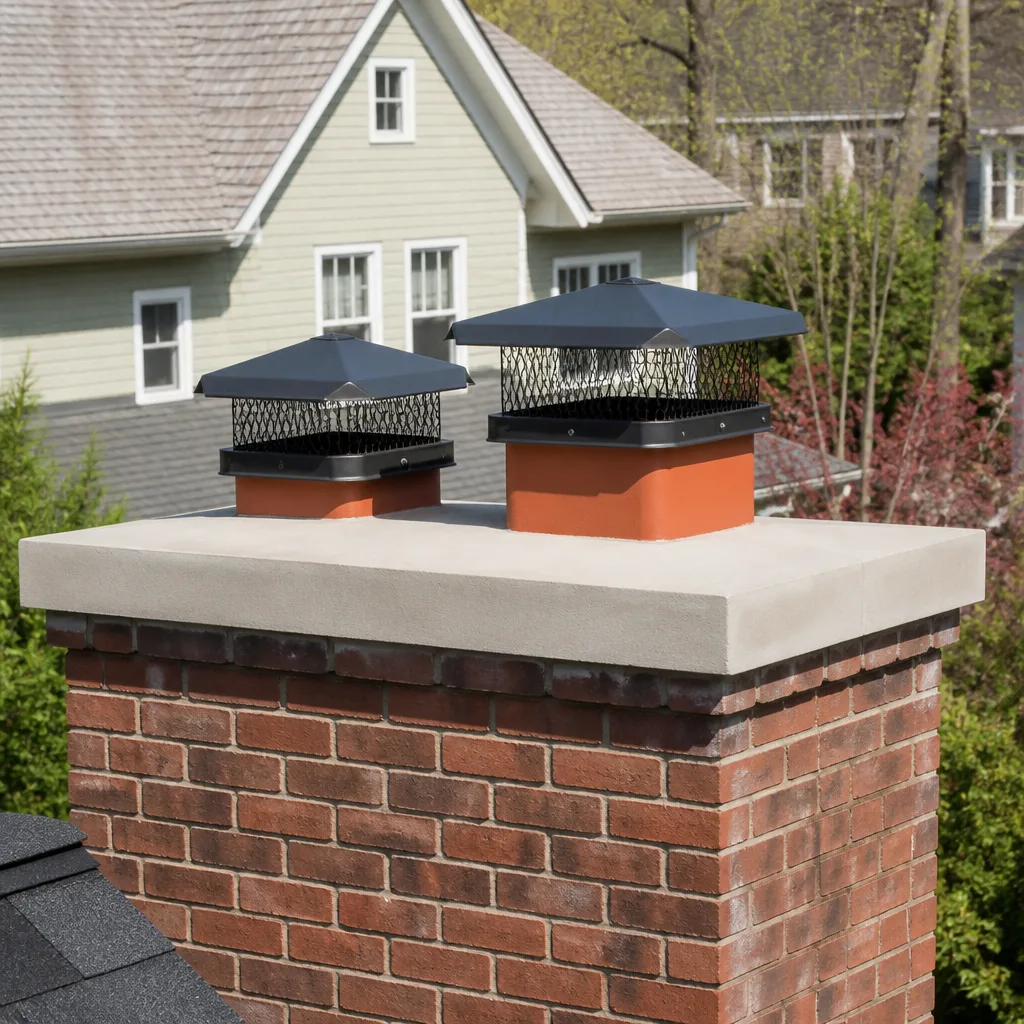 Caps & crowns
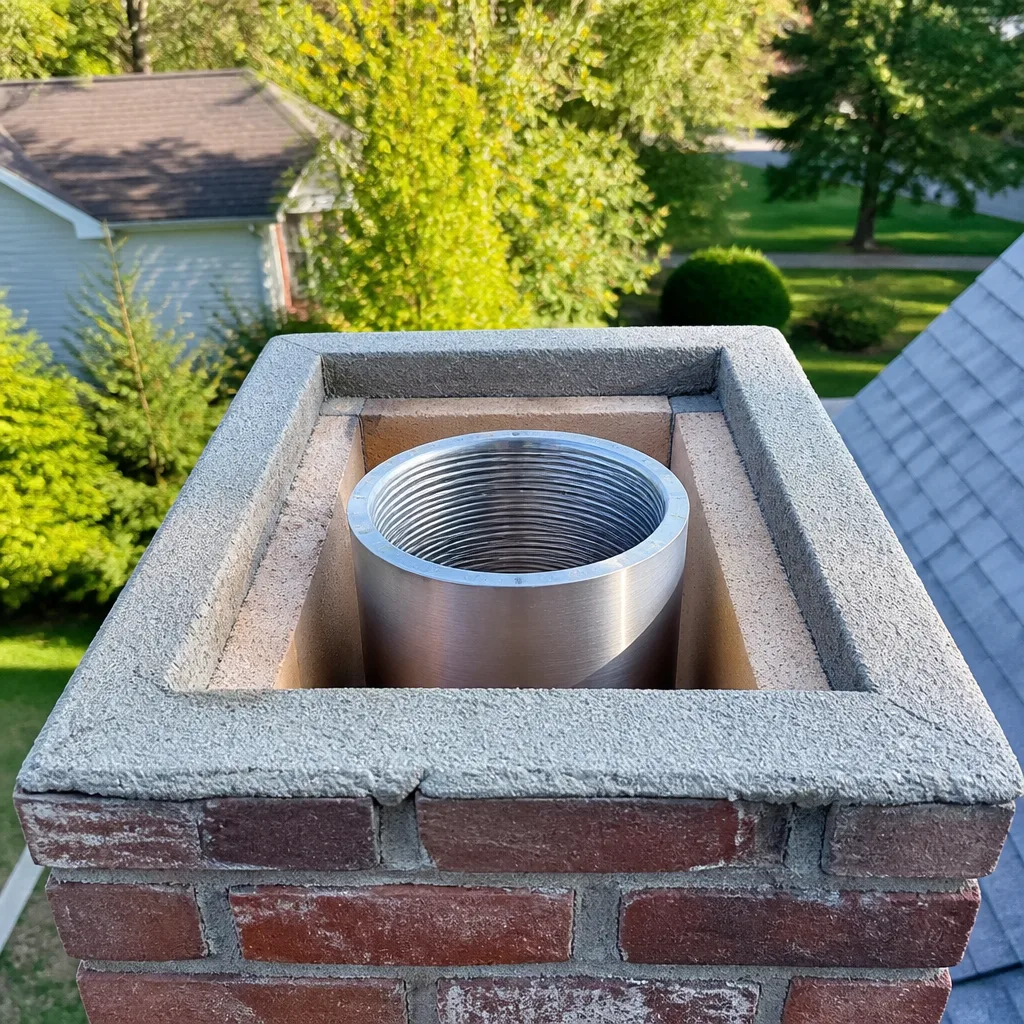 Flue relining
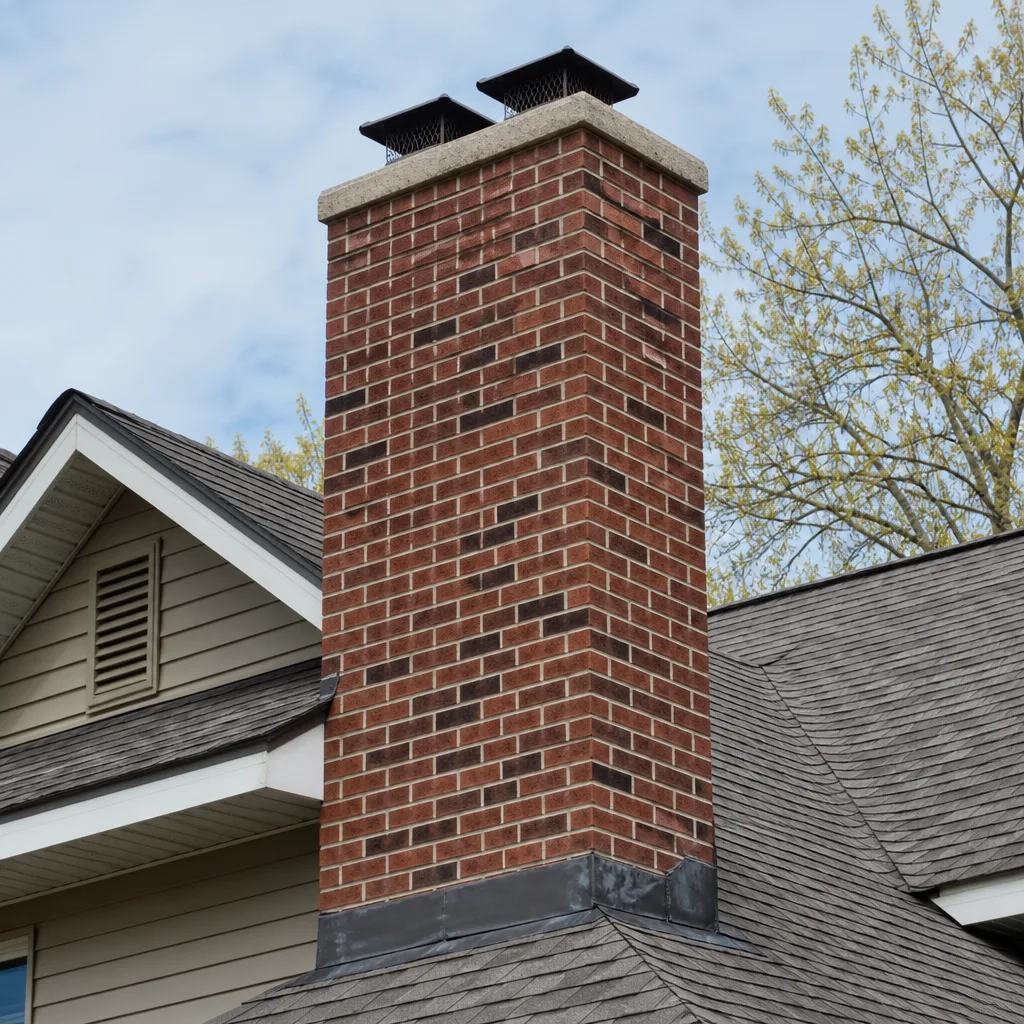 Masonry repair
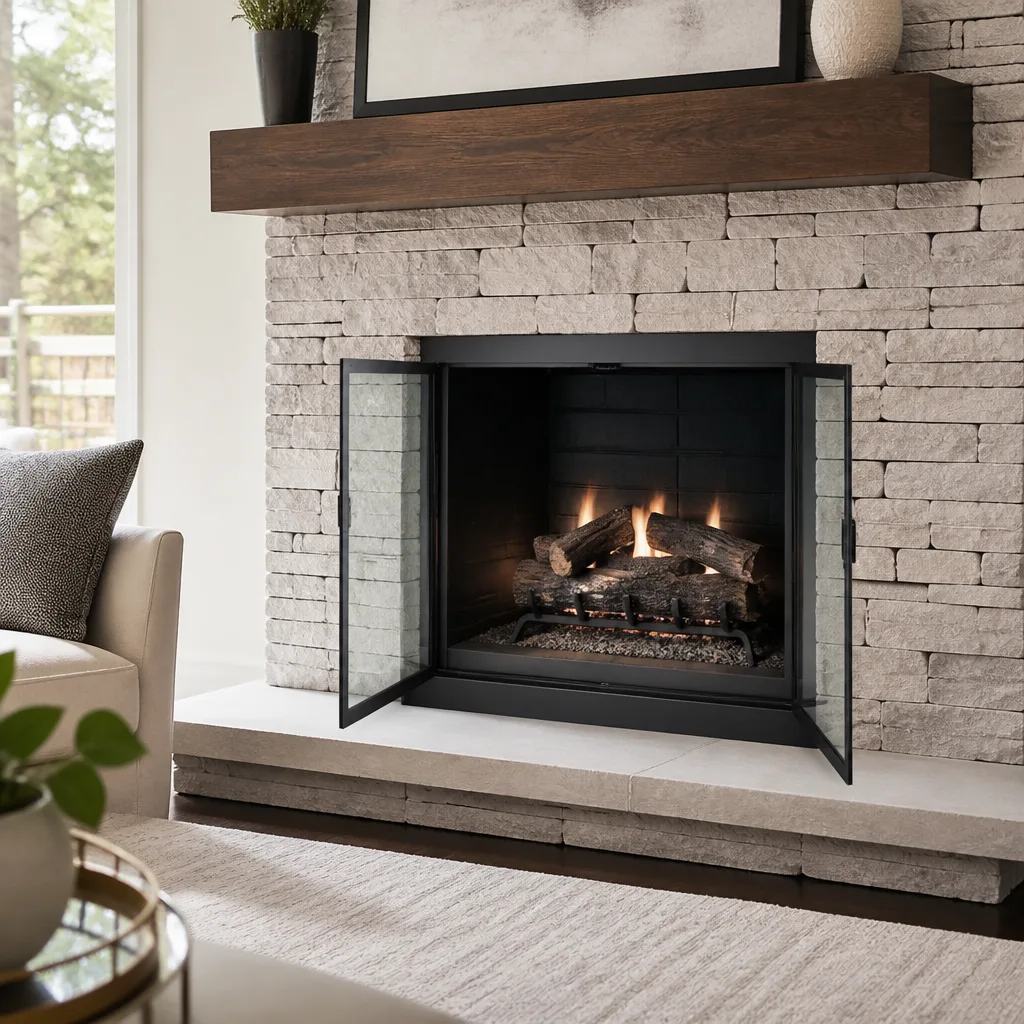 Gas fireplace service
Level 1 sweep and inspection to the NFPA 211 annual standard - flue, crown, cap, and flashing checked and photographed
Chimney sweep logs do not sweep chimneys. They loosen some creosote - which then falls where a brush and vacuum still have to collect it.
Chimney Sweep Maintenance Checklist for Folsom Homeowners
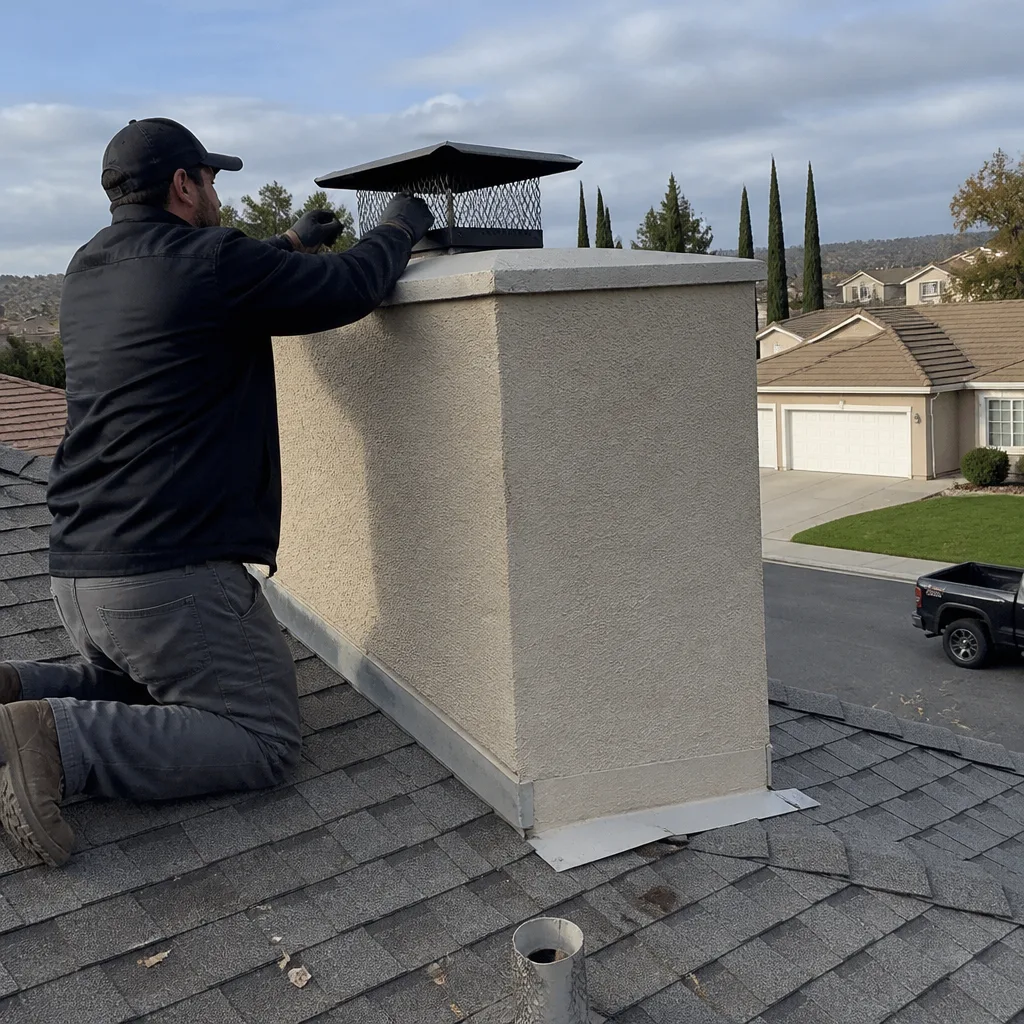
The component Folsom homeowners most consistently neglect isn’t the flue liner. It’s the chimney cap mesh. That fine-gauge screen sits exposed to every season, and in Folsom the real culprit is pine debris. American River canyon winds lift dry needles and small twigs onto rooftops, where they settle into cap mesh and clog it within a single season. Once airflow is restricted, the fireplace starts drafting poorly, smoke backs up into the living room, and moisture gets trapped inside the flue. A replacement cap costs about $30 to $80. The moisture damage from a clogged one runs into the thousands. This guide is a working maintenance checklist built specifically for Folsom’s fire-adjacent neighborhoods, aging 1980s tract home flues, and the seasonal swing between heavy winter use and nine months of dormancy. You’ll learn what to check before burn season, what to do after the last fire, when to call a professional, and how to keep records that satisfy both your insurer and California disclosure law.
Styles & brands we work with
- Sweep & inspection
- Caps & crowns
- Flue relining
- Masonry repair
- Gas fireplace service
Quick Answer
A Folsom chimney needs two inspections per year: a pre-season check in early fall before the first burn, and a post-season check in spring after the last fire. The checklist covers cap mesh, crown coat, mortar joints, flue liner condition, damper operation, and firebox integrity, with special attention to ember intrusion points if you live in the AEU, Empire Ranch, or Oak Willow corridors. A professional chimney sweep in Folsom typically runs $180 to $340, and most homeowners need one every 1 to 2 years depending on burn frequency and fuel type.
Table of Contents
- Pre-Season Checklist: What to Do Before the First Burn
- Post-Season Checklist: Catching Moisture Before Summer
- How to Visually Inspect Your Crown Coat and Mortar Joints from the Ground
- Liner Inspection Frequency: Why Fuel Type Matters More Than the Calendar
- Wildfire Ember Exposure: Extra Steps for Fire-Adjacent Zones
- Recordkeeping That Satisfies Insurance and California Disclosure Law
- Common Mistakes to Avoid
- When to Call a Professional
- Frequently Asked Questions
- The Bottom Line
Pre-Season Checklist: What to Do Before the First Burn
October is the make-or-break month for Folsom chimneys. The first cold snap sends everyone to their fireplaces at once, and that’s exactly when neglected systems fail. Here’s the order we recommend, and it starts at the top of the house, not the firebox.
- Check the cap mesh from the ground with a camera phone. Zoom in and look for pine needles, twigs, or visible blockage. If the mesh looks dark or matted, it’s clogged. In Folsom, pine debris from blue oaks and gray pines is the number one offender. A clear cap mesh means proper draft. A clogged one means smoke and moisture stay in the flue.
- Look at the crown coat for cracks. The crown is the concrete slab at the very top of the chimney. Hairline cracks are normal after 20 years. Wide cracks that catch a fingernail are not. Water enters through those cracks, freezes on cold Folsom mornings, and expands the damage. Crown coat repair is one of the cheapest structural fixes you can do early and one of the most expensive to postpone.
- Open the damper and look up with a flashlight. You should see a straight, unobstructed flue. In a wood-burning fireplace, you’ll see dark creosote buildup on the walls. A thin, flaky layer is normal. A shiny, tar-like glaze means stage two or three creosote, which is a chimney fire waiting for ignition. Gas inserts leave a white or gray residue instead, which is acidic and corrosive if left.
- Check the firebox for missing or cracked firebrick. The firebox is the chamber where the fire burns. Cracked firebrick exposes the metal shell or masonry behind it to direct flame. In a 1980s Folsom tract home, the firebox has seen 40 years of expansion and contraction. Small cracks are common. Gaps wide enough to see through are a repair item.
- Test the damper operation. It should open fully and close tightly. A damper that won’t fully close lets conditioned air escape up the flue from May through September. A damper that won’t fully open smokes out the living room on the first burn of fall.
- Look for any sign of animal intrusion. In Folsom, squirrels and raccoons are constant pressure. They enter through damaged cap mesh or missing caps entirely. Nesting material inside a flue is both a draft blockage and a fire hazard. If you hear scratching sounds in fall, you’re not imagining it. That’s an animal in the flue.
This pre-season check takes 15 minutes and costs nothing. It catches 80% of the issues that would otherwise become mid-winter emergency calls. And if anything looks off, a Chimney Sweep in Folsom can verify the problem with a camera inspection rather than guessing.
Post-Season Checklist: Catching Moisture Before Summer
Folsom’s climate is a moisture trap paradox. Winters are wet enough to introduce water into every crack and porous surface. Summers are hot enough to bake that moisture into expansion damage. The post-season check is about finding water entry points before June, when the damage gets locked in for another year.
- Inspect the crown coat again, this time after a rain. Look for darkened areas that stay wet longer than the surrounding concrete. Those are water absorption zones. In April and May, Folsom gets its last meaningful rain. That’s the ideal window to check.
- Look at the mortar joints between bricks. Run your eyes along every horizontal and vertical joint. Missing mortar that leaves a gap is called spalling. The freeze-thaw cycle does this in Folsom on cold January mornings, but the visible damage often emerges in spring. Joints with deep recesses need repointing, a masonry repair technique that restores structural integrity by removing degraded mortar and packing in fresh material.
- Check the flashing where the chimney meets the roofline. Flashing is the metal sheet that seals the junction. Rusted, lifted, or missing flashing is one of the most common causes of chimney-related leaks. On a Folsom tract home, the original flashing is often builder-grade galvanized steel that’s reached its service life.
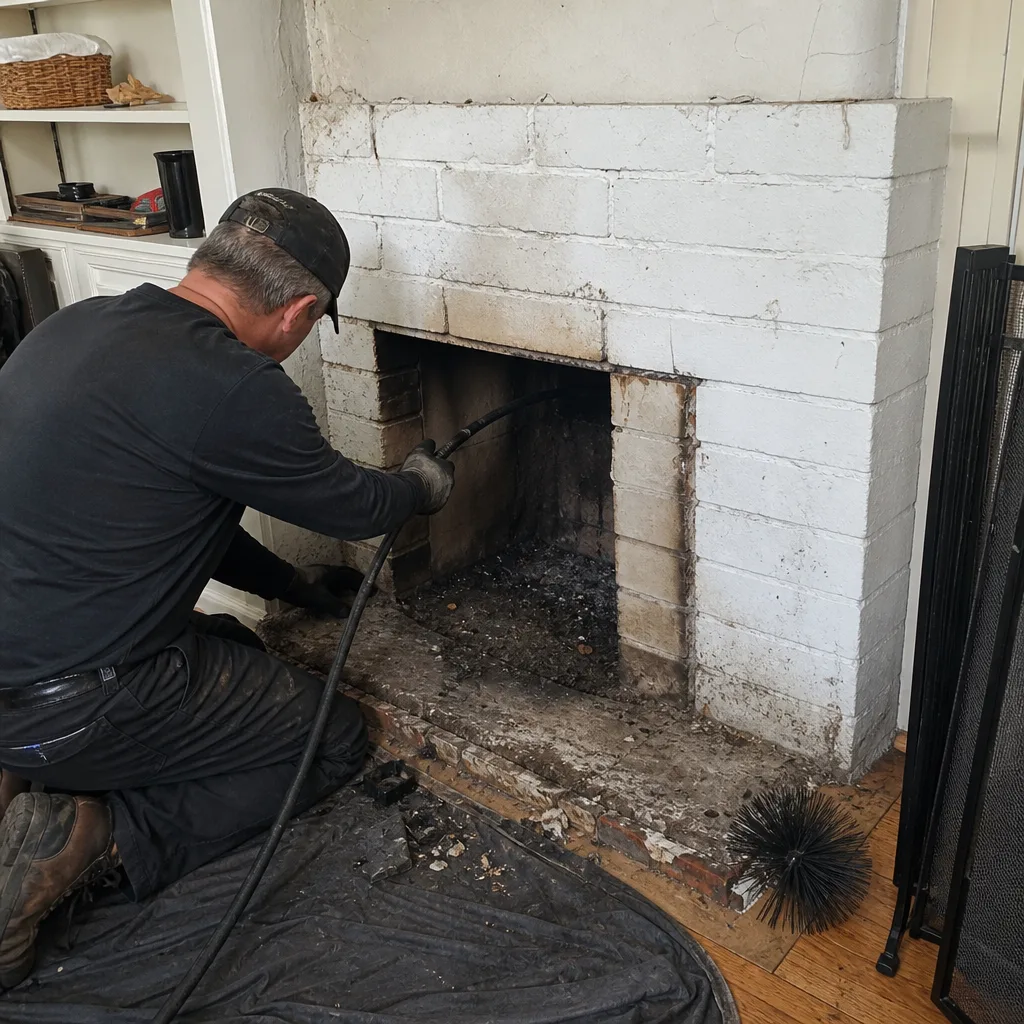
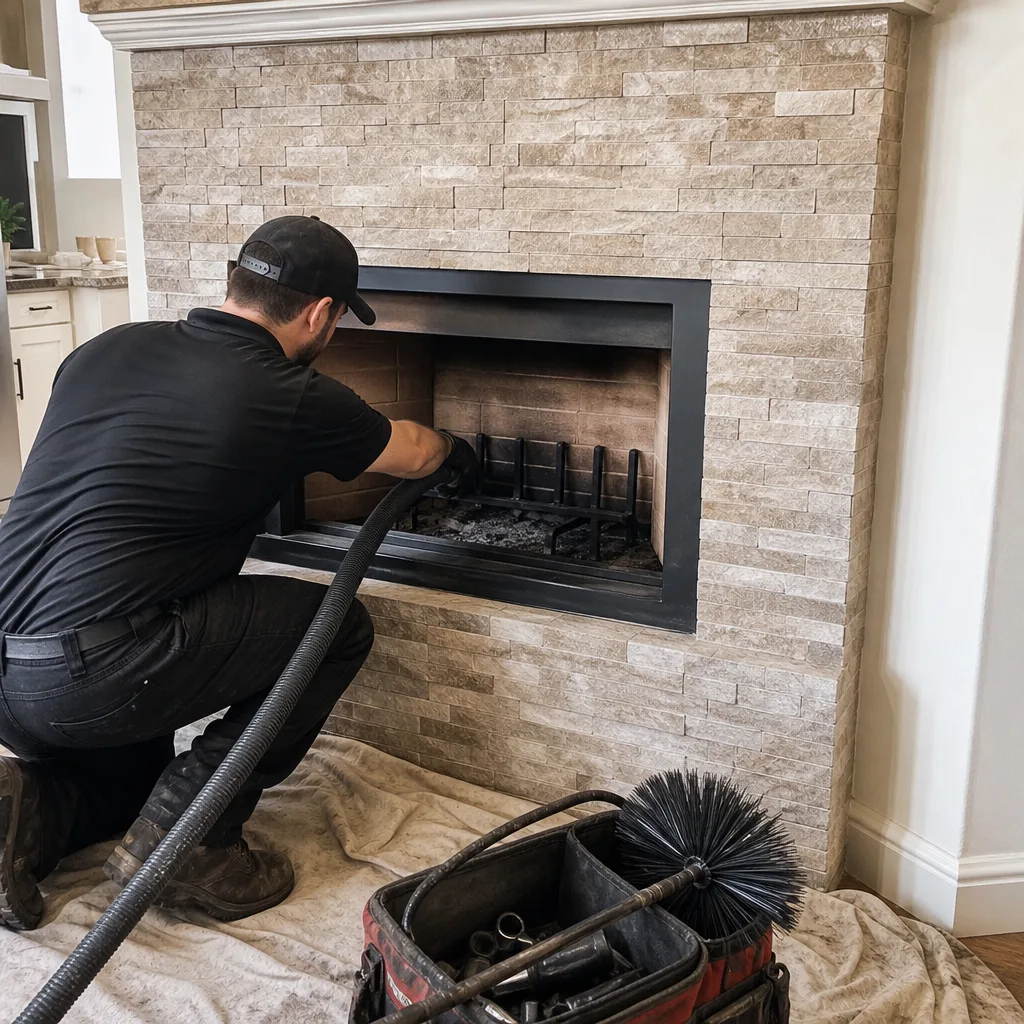
- Sweep the flue if you burned more than one cord of wood or used the gas insert daily. Post-season sweeping removes the creosote and acidic gas residue before summer heat bakes it onto the flue walls, where it becomes harder to remove. It’s easier to clean in March than in November.
- Close the damper tightly and note whether any draft still comes through. If you feel air movement in the fireplace during summer, the damper isn’t sealing. This is an energy loss issue and a comfort issue. In Folsom’s 100-degree July afternoons, a leaky damper forces your air conditioner to work harder.
The post-season check catches the moisture issues that Folsom’s dry summer will bake into permanent masonry damage. A chimney that survives wet weather unresolved often needs Chimney Repair in Folsom by the following fall. The earlier you catch it, the less invasive the fix.
How to Visually Inspect Your Crown Coat and Mortar Joints from the Ground
You don’t need to climb onto the roof for a meaningful chimney inspection. A camera phone from the ground, used correctly, catches most visible problems. Here’s the method we’ve refined over years of walking Folsom properties and showing homeowners what we’re seeing from street level.
First, stand back about 15 to 20 feet from the house. You’re looking for the chimney’s silhouette against the sky. The crown should be a clean horizontal line with no obvious missing chunks. If the top edge looks uneven or you see a dark void where concrete should be, that’s a crown coat problem. Take a photo at full zoom. Modern phone cameras resolve enough detail to show hairline cracks from this distance.
Second, walk to the side of the house where the chimney is most visible and use the phone’s zoom to inspect mortar joints. You’re looking for two conditions: recessed joints where mortar has fallen out, and white efflorescence stains running down the brick face. Efflorescence is the mineral deposit left behind when water migrates through the brick and evaporates. In Folsom it shows up as a chalky white wash, and it means water is inside the masonry. That’s a repair priority, not a cosmetic issue.
Third, check the flashing by zooming in where the chimney penetrates the roofline. If the metal appears curled, rusted, or separated from the shingles, moisture is entering at that point. Flashing failure is visible from the ground in most Folsom single-story and two-story homes. On steeper rooflines, you may need to move to the side or back yard for a clearer angle.
Fourth, photograph everything and date the photos. These become your baseline. Six months later, compare the same angles. You’re looking for progression: a hairline crack that widens, a mortar joint that deepens, an efflorescence stain that expands. That comparison tells you whether the issue is stable or active. Stable issues can wait. Active ones can’t.
If your ground-level inspection raises anything you can’t identify, the next step is a professional-level camera scan. A trained eye can see Chimney Sweep Folsom home service technicians doing this every day. The difference between a visible crack and a structural problem is often only clear from inside the flue itself. But the ground-level check catches most issues before they become urgent, and it takes 15 minutes with the phone you already own.
Liner Inspection Frequency: Why Fuel Type Matters More Than the Calendar
The standard advice says inspect your chimney liner every year. That’s true only if you burn wood. The real schedule depends on what you burn and how often, and Folsom homes run the full spectrum from daily winter wood fires to gas inserts that run from October through March.
For wood-burning fireplaces, the liner inspection should happen every year. Wood creates creosote, and creosote is corrosive. It also varies in consistency. A hot fire with dry oak produces a light, flaky creosote that brushes off easily. A smoldering fire with unseasoned wood produces a dense, glaze-like creosote that clings to the liner and requires aggressive removal. In Folsom, a lot of oak comes from local wood lots and isn’t always seasoned for a full year. If you’ve burned oak that was split less than six months prior, your liner has been exposed to more creosote than typical, and an annual check is the floor, not the ceiling.
For gas inserts, the liner still needs inspection, but the interval can stretch to every two years. Gas produces a white acidic residue that corrodes liners over time, but the degradation is slower than creosote buildup. However, Folsom’s hard water and high summer heat can accelerate corrosion in metal liners that are already compromised. If you run a gas insert daily through winter, two years between liner inspections is reasonable. If you notice any unusual odor or visible white crust inside the firebox, don’t wait.
For homes built in the 1980s, the original liner is typically clay tile. Clay tile liners last 40 to 50 years in ideal conditions, but Folsom’s freeze-thaw cycles and summer heat stress accelerate cracking. If your home is a 1980s or 1990s tract build and the liner has not been replaced, it’s overdue for a camera inspection. Cracked clay liner tiles allow heat and gases to reach the surrounding masonry, which is a chimney fire risk. The fix in many cases is a Chimney Sweep in Folsom professional installing a DuraFlex stainless steel liner system, which brings the flue back to code without tearing out the entire chimney structure. Or, if the clay liner cracks are minor, HeatShield resurfacing can restore the existing liner’s integrity. Both are professional-grade fixes, not hardware-store patches.
The liner is the one component you cannot inspect meaningfully yourself. A camera scan from inside the flue shows cracks, gaps, and degradation that are invisible from the firebox or the roof. That’s why the inspection frequency matters as a scheduling discipline, not just a maintenance ritual.
Wildfire Ember Exposure: Extra Steps for Fire-Adjacent Zones
Folsom sits on the edge of wildfire country. Neighborhoods in the AEU (American River canyon-adjacent areas), Empire Ranch, and the Oak Willow corridors are closer to wildland vegetation than homeowners in the city core. The primary chimney risk in these zones is ember intrusion. A wind-driven ember can travel half a mile and land on a rooftop, then get sucked into the chimney if the cap mesh is missing or damaged.
For fire-adjacent homes, the cap mesh isn’t just a debris blocker. It’s an ember screen. The standard 5/8-inch mesh found on builder-grade caps does a decent job. But if the mesh has rusted through or been bent from debris impacts, the gaps become ember entry points. During red flag warnings, the ember risk spikes, and homeowners in fire-prone zones should know the condition of their cap mesh before the warning hits, not after.
Here’s the fire-zone-specific checklist addition:
- Verify cap mesh integrity every spring and fall. Don’t wait for a clog. Look for rusted sections, bent wires, and gaps around the cap edge. In Empire Ranch, where oak canopy covers many rooftops, debris accumulates faster.
- Keep the roof clear of pine needles within 10 feet of the chimney. Dry needles on the roof are an ember fuel bed. A single ember landing next to a needle pile near the chimney can ignite the roof. The cap mesh stops embers from entering the flue; it doesn’t stop embers from landing on the roof.
- Replace any chimney cap with an integrated spark arrestor. A cap that’s just a cap doesn’t meet the need in a fire-adjacent zone. Spark arrestors stop burning particles from leaving the chimney (protecting you from causing a fire) and from entering an uncapped flue (protecting you from receiving one). Professional-grade caps and ventilation hardware from Gelco and Famco are built for this purpose, not just for show.
- During red flag conditions, don’t burn. It’s an unnecessary ignition source in the exact weather conditions where embers travel farthest. This may seem obvious, but every October there are Folsom homeowners running their first fireplace fire of the season while the National Weather Service has a red flag warning active for Sacramento County.
- Check that the damper closes fully after every use. A partially open damper in a wind event creates a draft that can pull burning material into the house. It also lets heated air escape, which matters less than the ember risk during fire season.
If you live in one of these corridors, fire-specific diligence is part of owning the home. The chimney is one of three direct ember entry points, alongside roof vents and open eaves. A $80 professional cap installation is the cheapest insurance you’ll ever buy for your home’s largest fire exposure.
Recordkeeping That Satisfies Insurance and California Disclosure Law
Folsom homeowners maintain chimneys for safety, but there’s a paperwork dimension that most people discover only when it’s too late. Two separate audiences care about your chimney maintenance records: your homeowner’s insurance company and the buyer in your eventual home sale.
Insurance companies ask about chimney condition when you file a fire claim. If you haven’t had the chimney professionally inspected or swept in the past two years, the adjuster may reduce the settlement based on lack of maintenance. The burden shifts to you to prove the chimney was maintained. A folder of receipts and camera inspection reports is the difference between a settled claim and a negotiated one.
California’s real estate disclosure requirements (TDS, the Transfer Disclosure Statement) include specific questions about fireplace and chimney condition. Sellers must disclose known defects. If the home had a chimney inspection that showed liner cracks, and you didn’t fix them, you disclose them. If you didn’t know, you still have an obligation to answer the question accurately. The clean paper trail protects both sides.
Here’s the recordkeeping format we recommend for Folsom homeowners:
- Keep every professional inspection report. The report should note the date, the technician, the scope (sweep only, full inspection, camera scan), and the findings. If the report is written by the technician rather than a standard form, that’s fine. The content matters more than the format.
- Photograph the chimney twice a year from the same ground-level angles. The images from your visual inspection become evidence of continuous maintenance. Store them in a folder with the date in the filename.
- Keep receipts for every sweep, every cap replacement, every liner repair, every damper replacement. Receipts are the backbone. A five-year receipt history covering two professional sweeps and one cap replacement tells a complete story.
- Document DIY observations. If you noticed a hairline crack in the crown in April and have before-and-after photos showing it hasn’t widened, that’s a maintenance record. Date everything.
- Store it all digitally and in a physical file. If you sell the home, the physical file goes in the disclosure packet. The digital copy stays with you for insurance claims.
Chimney Sweep Folsom documents every inspection with a written report and camera findings. The homeowners we serve in Folsom tell us the folder is what their insurance agent wanted to see after a claim or what their real estate agent requested during escrow. It’s not bureaucratic overhead. It’s proof of diligence, and both insurers and buyers respond to it.
Common Mistakes to Avoid
- Ignoring the cap mesh until smoke backs up. By the time you see smoke, you’ve also trapped moisture for a full season. The cap clogs gradually, and the only early warning is a slow decline in draft, which most people attribute to other causes.
- Sweeping only when the chimney “looks dirty.” Creosote hides in the flue, not the firebox. A visible dark layer in the firebox means the flue is significantly worse. The cleaning interval should be based on burn history, not visual firebox condition.
- Burning unseasoned oak. Green oak produces dense, sticky creosote that’s harder to remove and more flammable than seasoned wood’s flaky residue. In Folsom, homeowners with oak lots often split wood in August and burn it in November. That wood needs a full year, not three months.
- Skipping the post-season inspection. The spring check is when moisture damage is visible but not yet baked in. By August, the damage has expanded and the repair is more expensive. Folsom’s summer heat sets the damage.
- Using hardware-store sealants on the crown coat. An elastomeric sealant from a big-box store is a temporary cosmetic fix that fails within two years. The professional-grade materials used by Chimney Repair in Folsom technicians, including crown coat systems from Olympia Chimney, are formulated for the thermal cycling and moisture exposure that a chimney crown actually endures.
- Assuming gas fireplaces don’t need sweeping. Gas inserts don’t produce creosote, but they do produce acidic residue that corrodes the liner and firebox over time. The residue also clogs burner ports, which reduces efficiency and can create an odor. Gas chimneys need service less often than wood, but never.
- Not keeping receipts. This is the mistake that costs you at claim time, not at maintenance time. A homeowner who can’t prove a recent sweep has a weaker position with an insurance adjuster. The paper trail matters.
When to Call a Professional
Some chimney work is genuinely DIY. Cleaning the glass on a gas insert, checking the damper operation, or photographing the crown from the ground are all things a careful homeowner can do. But there are specific conditions where professional equipment and training are required, and trying to handle them yourself creates more risk than it resolves.
Call a professional if you see stage two or three creosote (shiny, tar-like, or puffy deposits) inside the flue. Removing dense creosote requires rotary brushes and professional-grade solvents. Chemical log fixes don’t work on heavy buildup, and scraping it yourself risks damaging the liner.
Call if you see cracked or missing firebrick in the firebox. Firebrick replacement is straightforward for a professional but easy to do wrong for a homeowner. The firebox is the direct flame containment chamber, and a bad patch job exposes the house to heat transfer.
Call if the crown coat has visible wide cracks or missing sections. Crown repair requires removing the old material, prepping the surface, and applying a professional-grade product like those from Olympia Chimney. The water damage from a failed crown is cumulative and expensive.
Call if you’ve seen efflorescence on the exterior brick. White mineral staining means water inside the masonry, and the fix is rarely as simple as sealing the outside. A professional can trace the water entry point and fix the source, not just the symptom.
Chimney Sweep Folsom offers free estimates in Folsom. Call (833) 589-9896 if any of these conditions are present on your checklist. The estimate is free, and the camera inspection shows you exactly what’s happening inside the flue, so there’s no guessing.
Frequently Asked Questions
A standard chimney sweep in Folsom runs between $180 and $340 depending on the flue type, accessibility, and level of creosote buildup. Gas insert flues run toward the lower end; wood-burning flues with heavy creosote run toward the higher end. A sweep typically includes the flue cleaning, firebox cleanup, and a basic visual inspection. If the sweep identifies liner damage or structural issues, those are separate repair estimates. Call (833) 589-9896 for an exact quote on your specific chimney. Estimates are free.
Every year if you burn wood, every two years if you run a gas insert, and immediately if you ever see a shiny, tar-like creosote layer or smell smoke inside the house during a burn. Folsom’s heavy winter use pattern means most wood-burning homeowners accumulate more than a cord of wood per season, which is the point where annual sweeping becomes necessary. The best time to schedule is September, before the first cold snap.
Not necessarily. Minor cracking in clay tile liners can be restored with HeatShield, a resurfacing system that repairs the damaged clay without removing the old liner entirely. More significant cracks, or liners that have shifted or collapsed, may require a full reline with a DuraFlex stainless steel system. The camera inspection determines which path applies. A reputable chimney professional will show you the camera footage and explain what you’re seeing, not just hand you a replacement quote.
Creosote builds up, and dense creosote is a chimney fire fuel. Even a small chimney fire can crack the liner and spread heat into the surrounding framing. Moisture enters through a neglected crown or damaged cap, deteriorates the masonry through freeze-thaw cycles, and eventually requires structural repair. The repair costs from deferred maintenance typically run three to five times what annual sweeping would have cost. In the worst case, a clogged flue forces carbon monoxide back into the house. It’s a slow accumulation that becomes an expensive emergency.
No. Gas fireplaces produce acidic residue rather than creosote, and the residue builds up more slowly. A gas flue typically needs sweeping every two years rather than annually. But gas fireplaces still need professional inspection, because residue corrodes the liner and clogs burner ports. The risk profile is different, not absent.
You can do the ground-level visual check yourself, and you should. That catches cap mesh issues, obvious crown cracks, and visible mortar deterioration. But the flue interior is not visible from the ground or the firebox, and that’s where the serious problems live. A camera scan is the only way to verify liner condition, and professional sweeping equipment is the only way to remove creosote. The DIY check is a complement to professional service, not a replacement for it.
The Bottom Line
A working chimney maintenance routine for Folsom homeowners has three anchors: check the cap mesh before every burn season, inspect the crown and mortar after the last spring rain, and keep a paper trail that would satisfy an insurance adjuster and a California real estate disclosure form. Most chimney problems are slow and visible from the ground if you look with intent. The ones that aren’t visible from the ground live inside the flue, and those require a camera. Folsom’s specific risk profile, which includes ember exposure in fire-adjacent corridors, aging 1980s clay tile liners, and pine debris that clogs cap mesh faster than most homeowners expect, makes a twice-yearly discipline more important here than in many other markets. Do the free checks, schedule the professional sweep on the right interval, and fix small problems before they become structural ones. And if you’d rather hand the checklist to someone who does this every day, Dryer Vent Cleaning in Folsom is another safety essential we handle alongside your chimney, so the whole exhaust system gets addressed in one visit.
Written by the team at Chimney Sweep Folsom, serving Folsom since 2011.
See the difference
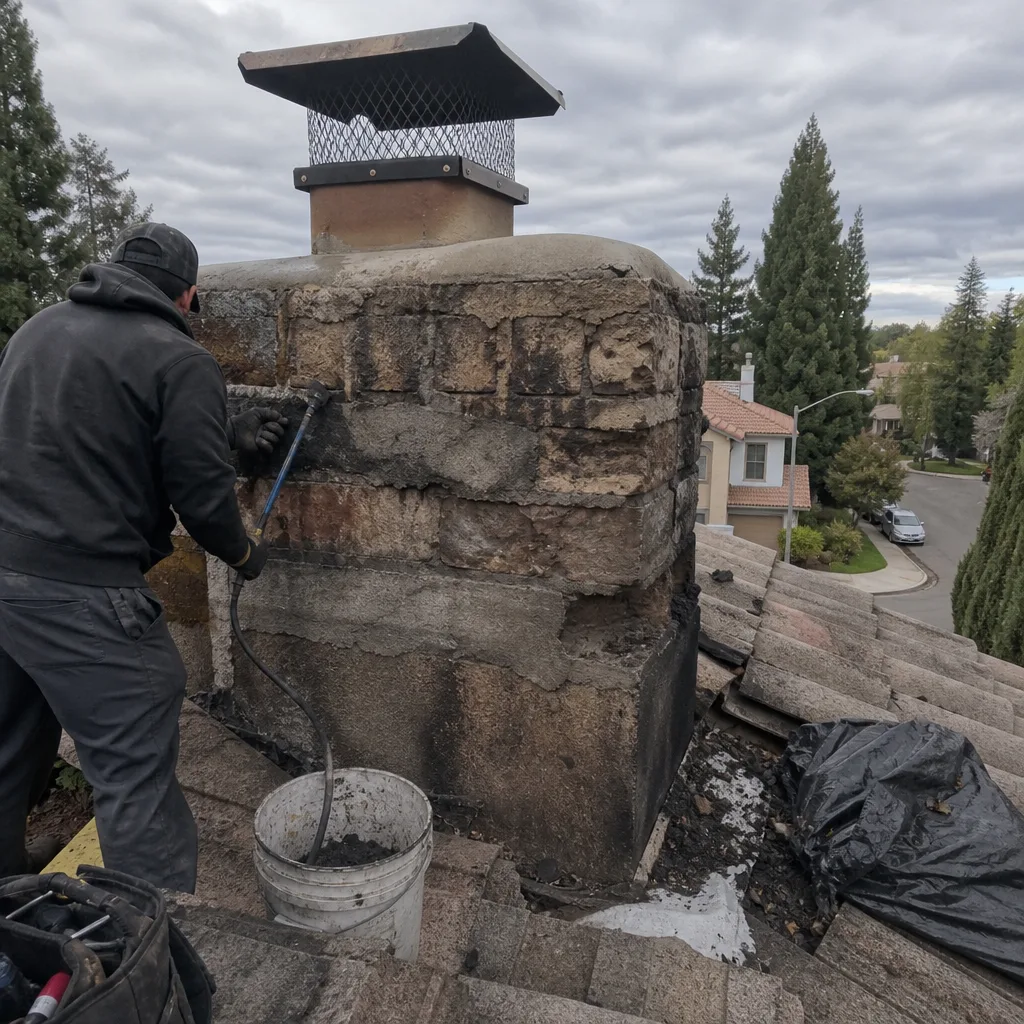 Before
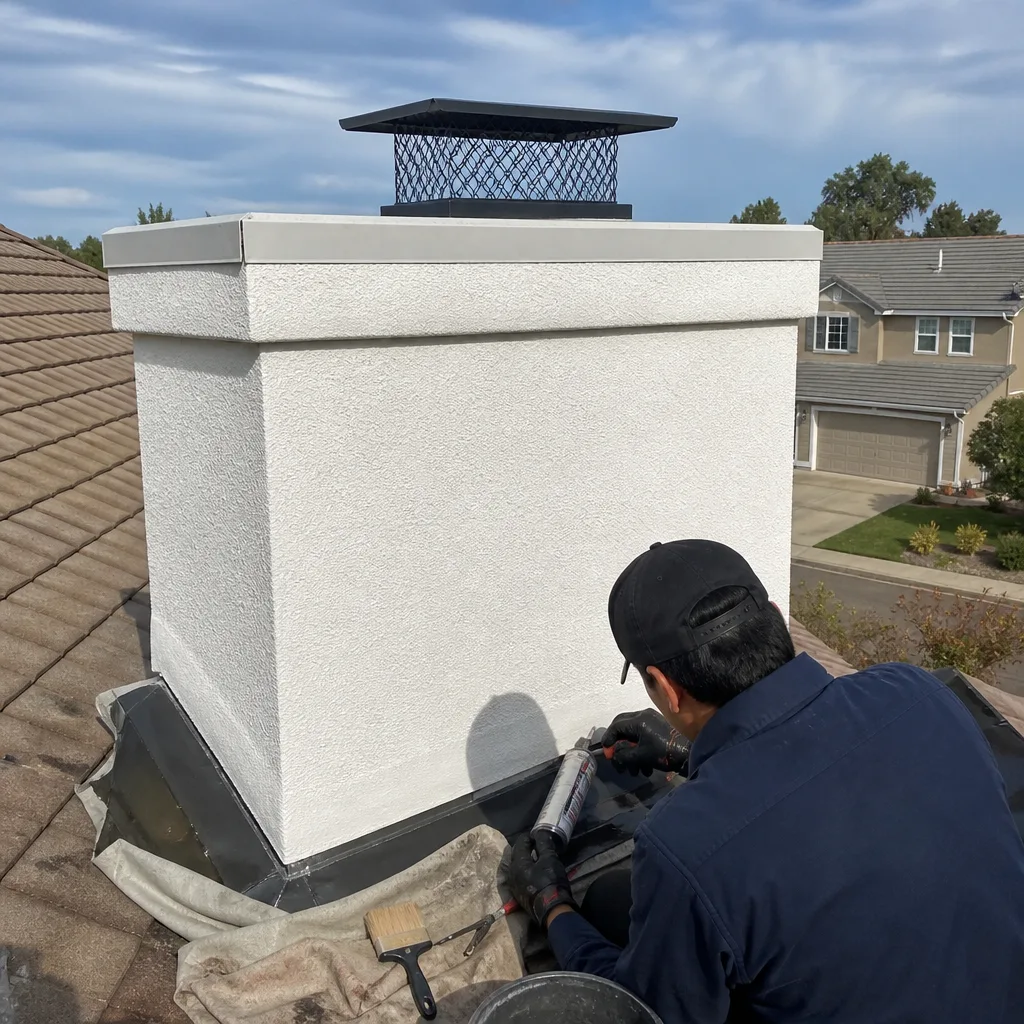 After
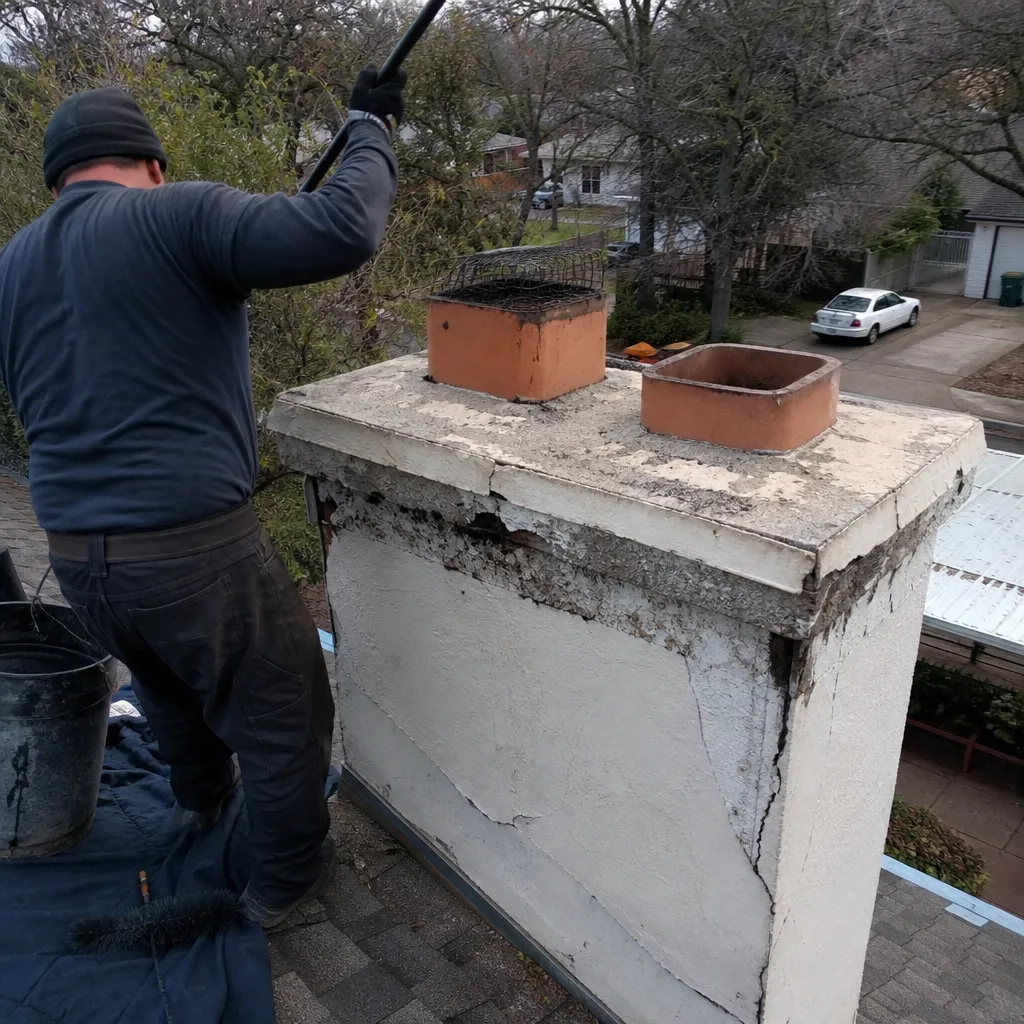 Before
 After
 Before
 After